 The top experienced right guards in pro football, graded and ranked by the B/R Scouting Department. Rookies to be graded separately.Player photos: AP Images
34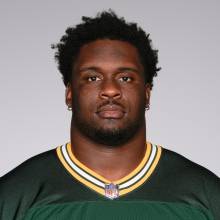 Anthony Belton52Grade
Belton completed his rookie season with seven starts, six at right guard and one at right tackle. The first-year blocker also worked through an ankle injury that cost him Weeks 4-7 and Weeks 9-11 after a reaggravation. Belton opened the year as Green Bay's primary backup right tackle before kicking inside to cover injuries, where his massive, densely built frame and considerable raw power stood out. He is a blunt-force blocker with heavy hands, pocket-clearing power when uncovered and knockout force against standstill targets. Issues present themselves regarding everything attached to control. His lumbering feet, lower-half tightness, erratic footwork and overreliance on pure power make it difficult for him to adjust to post-snap movement, line up targets and sustain. Green Bay's run-first, play-action-oriented system gives him a pathway to functional development, but the profile still carries a boom-or-bust quality regardless of environment.
33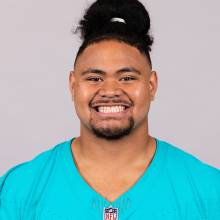 Jonah Savaiinaea52Grade
Savaiinaea started all 17 games and did not miss a snap as a rookie, but his durability was the clearest positive during an uneven transition to left guard. The move inside and jump in competition exposed an underdeveloped pass-protection baseline, with persistent oversets, late hands and poor positional leverage. His mass and raw power flashed in the run game, especially on doubles and down-blocks where he could surge and displace defenders in the post. Consistency remained problematic. The first-year blocker often leaned into contact without closing space with his feet, causing overextension late in reps and an unreliable hit rate on climbs. A 2026 move to right guard at least returns him to his collegiate side, creating some optimism. However, his hand usage, leverage and footwork need major growth.
32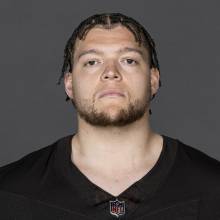 Teven Jenkins52Grade
Jenkins started four games in 2025 but frequently entered via spot duty and as a sixth offensive lineman. Jenkins is a thickly built guard with solid length and play-strength, and prior years showed flashes of immense finishing power. A serviceable size/power profile worth carrying as depth still exists, but accumulated wear has diminished his movement skills and overall control. His upright playing style and clunky footwork sap his sustain, creating soft edges and quicker disengagements in the run game. Those issues also bleed into pass protection, where erratic hands expose his frame, delay his anchor and leave him vulnerable when forced to redirect. Jenkins still has enough size, physicality, versatility and power flashes to warrant a backup role, but the body control and movement decline keep him below dependable starter level.
31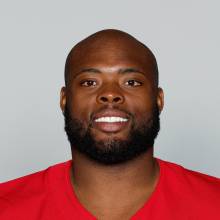 Robert Jones55Grade
Jones missed all of the 2025 campaign after suffering a broken bone in his neck. He then signed a one-year deal with the 49ers this offseason. His projection is largely tied to his 2024 tape with the Miami Dolphins, where he started 17 games and showed the strength, power and physicality that provided projectable upside. Jones is a thick, heavy-handed guard with a firm anchor and real people-moving ability when he catches defenders on angle-drive blocks or works downhill. He can also provide pocket-clearing force when uncovered. Movement and control are limiting factors. False steps and adequate athletic ability leave him late on backside zone tracks, while his aggressive pass-protection approach shrinks the margin for error with leverage and strike-timing. If healthy, Jones gives the 49ers useful depth, strength and physicality, but his best fit remains as a backup guard who can spot start in a downhill, quick-game/play-action structure.
30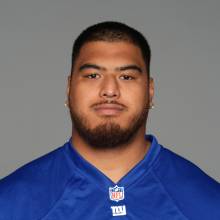 Daniel Faalele56Grade
Faalele is a massive, space-eating guard who has not missed a snap over the last two seasons, giving him real dependability despite a capped profile. The 6'8", 380-pound blocker understands how to maximize his size in pass protection with short, inside-out sets that force rushers down the middle of his frame or make them take the long path. This approach can function inside a rhythmic, quick-hitting passing game, but it also creates soft, accessible edges when rushers can stress his foot-speed, force late movement or make him recover after initial contact. In the run game, Faalele walls off targets on angle-drive blocks and covers up slower-processing linebackers at the second level, but he struggles to redirect and intersect movement across his face or sustain when defenders make him adjust in space. His size, durability and ability to keep simple reps orderly give him value, but the movement limitations place a hard cap on his ceiling.
29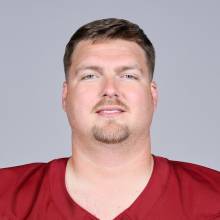 Andrew Wylie56Grade
Wylie filled in for five starts at right guard during the 2025 campaign, adding to a career with 100-plus starts, valuable postseason experience and proven versatility. Wylie is a quality swing backup and spot starter at multiple positions, with his best current fit likely inside at guard. He plays with an alert, crafty approach, adequate play-strength and enough functional athletic ability to keep the offense on schedule for short stretches. His processing helps him stay in proper positional leverage relative to the intent of the play, and he generally understands how to minimize exposure. Limitations show up when he is forced into space or isolated against quicker, wider-aligned rushers who can evade his initial strike, causing him to step under himself and struggle to recover from compromised positions. He remains a useful, experienced reserve rather than a full-time answer.
28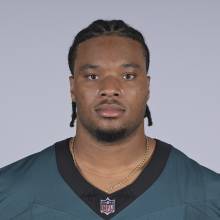 Tyler Steen58Grade
Steen started all 17 games during his third career season and first as a full-time starter, providing serviceable run-game play but remaining a liability in pass protection. Philadelphia's offense took a step back around him. Healthier versions of Lane Johnson and Cam Jurgens, plus a more play-action-heavy structure, could give Steen a better runway this fall. Still, Steen's individual limitations were obvious. In the run game, he has enough initial burst, density and pop to cover up defenders and feed down linemen on double-teams, but his sustain and body control fade when defenders move across his face. Those same issues carry into protection, where unrefined footwork causes him to drift past his spot against wider alignments, opening a soft inside shoulder and delaying his transition into the anchor. Late strike-timing, slow recognition skills and modest length also give rushers easier access to his edges and adjacent gaps when he has to sort through stunts, games and blitzes. Steen's first full year as a starter leaves plenty of room for growth, especially in a friendlier offensive structure, but his 2025 tape displayed a below-average starting guard.
27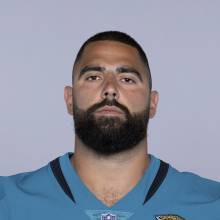 Patrick Mekari60Grade
Mekari started 14 games in his first season in Jacksonville despite concussion and back issues, once again showing the versatility that has defined his career. He is more useful than impactful as a crafty, hard-nosed lineman with enough athletic ability, leverage understanding and hand activity to make defenders work. His experience across the line gives him roster value, but he functions best in a run-first scheme that limits true dropback exposure. Mekari is sawed off with a shaky anchor, shrinking his margin for error with strike-timing and placement, leading to clean losses across his face when his hands are late or off target. He can spot start across multiple positions, though. Still, the lack of power and down-to-down stability keep him below dependable starter level.
26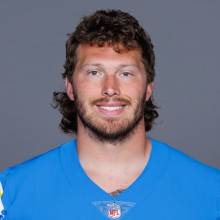 Cole Strange61Grade
Strange entered the lineup in Week 4 and brought stability over 14 starts, putting together the best season of an otherwise disappointing career. His value is rooted in quickness, body control and scheme fit, with the movement skills to reach, cut off the backside, climb to backers and function as a puller in a zone-heavy run game. In pass protection, Strange leans on jump-sets to eliminate rushers' runway and help offset below-average play-strength, while staying alert when uncovered to provide a thump on adjacent rushers. He remains scheme-dependent, though. Head-up power can stalemate or compress him, and his anchor is not sturdy enough to consistently survive without structure. Following Mike McDaniel from the Miami Dolphins to the Chargers gives him a realistic path to maintaining the recently established functional level.
25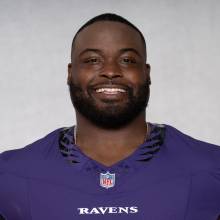 John Simpson61Grade
Simpson remained a durable, physical presence in 2025, extending his run of consecutive 17-start seasons while bringing his usual size, length and tone-setting demeanor to the interior. At 6'4" and 330 pounds with long arms and heavy hands, Simpson can cover up defenders, create jolt on contact and deliver forceful body blows when uncovered or working downhill. Once latched, he is difficult to work through and has enough raw mass and power to tilt the line of scrimmage. However, his game remains more physical than controlled. Simpson's below-average body-control, balance and sustain skills lead to slipping off too many blocks late in the process, especially when defenders force him to adjust in space or work across his face. In pass protection, he can hold up when square and connected, but his mirroring limitations and recovery range leave him vulnerable when isolated against quickness. Simpson's durability, size and demeanor give him functional value as a tone-setting guard in the right structure, but the lack of polish and inconsistent control keep him closer to a low-end option than a dependable every-down answer.
24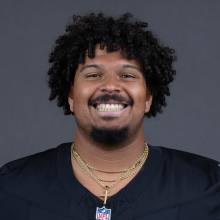 Caleb Rogers62Grade
Rogers entered the Raiders' lineup in Week 13 and started the final six games, putting enough tape together to compete for the full-time job in Klint Kubiak's system. The 2025 third-round draft pick is a sawed-off, sturdy guard with solid play-strength, good power, above-average movement skills and a fiery, physical demeanor. Those traits showed up through a jarring punch, pocket-clearing force when uncovered, the burst to uproot down linemen and enough range to intersect targets on the move. The second-year blocker must refine his technique, though. Raw footwork and rigid hand usage limited his ability to adapt and recover when isolated in protection, while leading to overextension and shaky balance on base and angle-drive blocks. Rogers' physicality, traits and improved ecosystem give him a viable path to earning a starting job, but his technique must stabilize.
23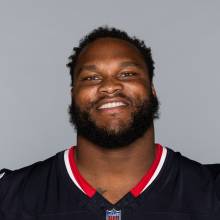 Ed Ingram62Grade
Ingram showed more consistency last season, offering some validation for his second-round pedigree while still carrying a volatile profile. His value is rooted in linear explosiveness, heavy hands and enough play-strength to create displacement when he can work vertically or strike uncovered defenders in pass protection. Ingram can generate movement in the run game when his aiming points are clean. His raw power provides a physical presence that stands out in flashes. Unfortunately, his game remains more forceful than controlled. In pass protection, he remains vulnerable in true one-on-one situations against high-end interior rushers, where his heavy-handed approach can backfire if his timing or placement is off. His feet can stall late in reps, leaving him susceptible to being slipped cleanly by refined counters. Ingram has enough size, power and physical upside to compete for a starting role, but the pass-protection variance and inconsistent control make him better suited as the fifth starter on a stable line.
22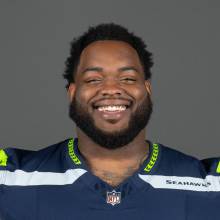 Anthony Bradford63Grade
Bradford started every game this past season and became more functional inside Klint Kubiak's run-first, play-action-heavy system—which helped quiet some of the high-variance play from earlier in his career. Bradford wins with mass, density and some of the league's heaviest hands, allowing him to root down, hold ground and jar defenders when his timing is right. His power shows up when passing off penetrators, finding uncoveraged work, feeding down linemen on doubles and covering up defenders in the post. He also showed a firmer inside hand in pass protection, reducing some of the quick losses across his face. The volatility remains, though. Bradford's choppy footwork and tendency to bite on setup moves create short corners and isolated losses. His 2025 tape was more functional than clean, with Kubiak's structure doing a good job allowing his power to shine while masking some of the movement and hand-timing issues.
21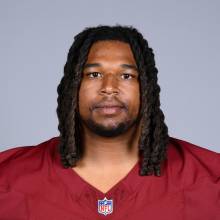 Robert Hunt65Grade
Hunt played just two regular-season games in 2025 due to a torn biceps before returning for Carolina's Wild Card matchup against the Los Angeles Rams. When available, his profile remained consistent with the '24 season and much of his career as a rugged, power-based guard with a broad frame, thick build and heavy hands. Hunt is at his best against tightly aligned defensive tackles, where he can establish first meaningful contact, absorb force and provide pocket-clearing power. That same linear power translates to the run game, where Hunt can cover up, lift and displace down linemen on double-teams or eject second-level defenders who play him head up. His downhill, aggressive style also creates volatility. Erratic strike-timing, high pads and loose hand-placement can sap his anchor and lead to quick losses across his face. Hunt remains a useful, physical starter, but durability and pass-protection consistency limit his value.
20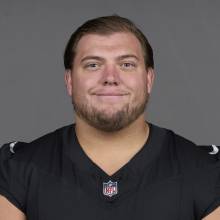 Jackson Powers-Johnson66Grade
Powers-Johnson settled at right guard to open the 2025 campaign after splitting time between center and left guard as a rookie. His second year was cut short by an ankle injury after seven starts. His tape remained a mix of promising physical flashes and raw technical execution. Powers-Johnson has a sawed-off, stout build with enough play-strength to firm up the point of attack, along with fluid movement skills to redirect and work himself out of some compromised positions. He is also a force when uncovered in pass protection, where his power and demeanor allow him to clear the pocket and punish adjacent rushers. The volatility shows up when isolated against quality interior rushers. His unpolished footwork and hand usage can create quick losses across his face, and his aggressive temperament still leads him into bad positions when he overshoots his landmarks or chases contact without control. In the run game, his strength, movement and finishing demeanor create flashes of a tone-setting guard, but the down-to-down precision still needs to improve. The 23-year-old's physical traits and age leave him with a clear runway to become a solid starter, especially inside a Klint Kubiak system. At this point in time, his current profile remains more projection-based than stable.
19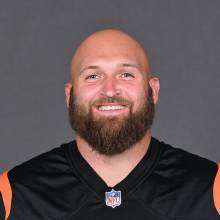 Dalton Risner66Grade
Risner provided a stabilizing presence for Cincinnati during the 2025 campaign, starting 11 games after an injury-interrupted '24 season with the Minnesota Vikings. Risner is a veteran guard whose value is rooted in awareness, toughness and pass-protection reliability. He plays with good eyes and processing speed, rarely gets fooled by line games or post-snap movement and uses efficient technique to stay connected and keep rushers from quickly accessing his frame. His anchor is functional when he is square, but he is not a naturally powerful blocker and can be stressed when rushers force him to redirect or recover late. In the run game, Risner is more positional than forceful, with enough feel to fit, wall off and stay on schedule. His stiffness and average movement skills cap his effectiveness. Conversely, his steadiness, competitive toughness and ability to keep reps orderly make him a useful short-term starter or high-end interior reserve.
18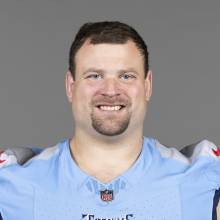 Kevin Zeitler66Grade
Zeitler reached 220 career starts (including postseason) during the 2025 campaign, starting 16 games at age 36 and continuing one of the most durable, steady guard careers of his era. Zeitler is no longer the top-10 right guard he was throughout most of the last decade, but his dense build, good play-strength, processing and veteran savvy still allow him to stay functional. He rarely puts himself in poor positions, understands where help is coming from and plays with enough leverage and hand timing to remain firm in tight quarters. Decline shows up in his lack of wiggle and recovery range when forced out of phase, especially against movement, counters or space-oriented run-game demands. Zeitler still brings toughness, reliability and enough anchor to stabilize a line. At this stage of his career, he fits best as a functional starter or high-end veteran stopgap.
17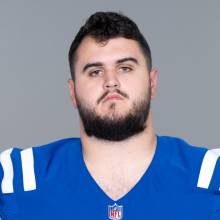 Matt Goncalves67Grade
Goncalves kicked inside to guard in 2025 and started 16 games after logging eight starts as a rookie offensive tackle. The move helped unlock his best trait: run-blocking. Goncalves generated consistent vertical push on doubles and angle-drive blocks while arriving square and under control on climbs, making him a plus contributor inside one of the league's best run games. In pass protection, his inexperience became evident. Simulated pressures created some mental errors. The 2024 third-round draft pick can be baited out of position by counters, delaying his transition into the anchor. Goncalves has a stiff, firm punch to jar rushers when his timing is right. Ultimately, he was most comfortable off play-action when he could close space and establish first meaningful contact. His run-game value is real, but the pass-protection processing and hand-timing keep him in the functional-starter range.
16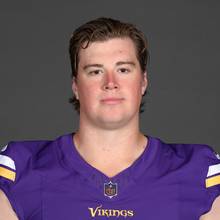 Will Fries68Grade
Fries returned from a devastating 2024 leg injury to start all 17 games during his first season in Minnesota, reclaiming much of the baseline performance that made him one of the league's more underrated guards. Fries is a tall, physical guard who wins with competitive toughness, good play-strength and a finisher's mentality, especially when he can fit square, strain through contact and impose himself on angle-drive blocks. His hands, leverage and anchor are still good enough to survive in protection, but the 2025 tape was not quite as clean as his pre-injury peak. He was less reliable at intersecting, sustaining and finishing second-level targets, and his hand usage in pass protection was less refined, exposing his frame and leading to more compression than his best Indianapolis Colts tape. Fries still brings starting-caliber toughness and tone-setting value, but his post-injury profile settled closer to a functional starter than the ascending guard he appeared to be in 2023.
15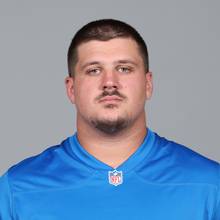 Tate Ratledge68Grade
Ratledge started all 17 games as a rookie and showed steady growth as the season progressed, particularly with his processing against movement, line games and simulated pressures. As his recognition improved, he was quicker to shore up penetration, pass off threats and get into his anchor, thus allowing his play-strength to show up more consistently. Ratledge has enough power to create movement on doubles, strain in the post and climb with good timing to wall off linebackers once latched. His tall, sawed-off build and tardy strike-timing still create issues, exposing his chest and leading to some glaring lapses in leverage and control when defenders beat him to first meaningful contact. Detroit's play-action-heavy structure and Jared Goff's quick release also helped minimize the number of high-leverage, true dropback reps the rookie had to survive. Ratledge's first season showed starter-level traits and encouraging growth, but his hand-timing and leverage consistency still need to sharpen before he becomes a dependable every-week guard.
14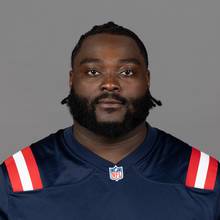 Mike Onwenu68Grade
Onwenu remains a hulking, power-oriented guard whose best value comes when he is allowed to play inside and lean into his mass. At 6'3" and 350 pounds, he can cover up and displace defenders in downhill run concepts, while bringing a firm anchor to halt the bull-rush in pass protection. His size and play-strength are legitimate carrying traits, and his proven guard/tackle versatility gives New England useful lineup flexibility. The limitations are tied to movement and range. Onwenu's mediocre recovery skills show up when isolated against wide rush alignments, late movement and quickness across his face. He is not a guard who consistently wins by redirecting or adjusting in space. His hands are functional but not especially refined, which narrows his margin of error when defenders force him off his initial track. Onwenu is best viewed as a functional starting guard with real power and anchor value, but his movement limitations keep him closer to the capped-starter tier than the high-end group.
13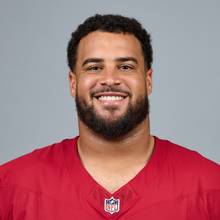 Isaiah Adams69Grade
Adams worked through thumb and back injuries to start 11 games last season inside the league's most pass-heavy offense by attempts, giving him difficult exposure for a young guard. Despite the environment, Adams became one of the more pleasant surprises when watching his film. He is a burly, wide-bodied guard with very good play-strength, heavy hands and above-average contact balance, allowing him to hold up as a surprisingly effective one-on-one blocker in protection. When centered, he can absorb force, stay attached and create enough movement in the run game to look like more than just a placeholder. Arizona's additions of Isaac Seumalo and second-round pick Chase Bisontis suggest the team still has questions about Adams' long-term reliability. But his most recent tape showed starter-quality traits. If Adams stays healthy and maintains that level of play, he has a realistic path to solid-starter value.
12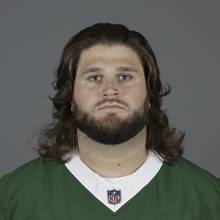 Joe Tippmann69Grade
Tippmann kicked back out to guard after Alijah Vera-Tucker's season-ending injury and started all 17 games, improving over the second half of the season while the Jets shifted toward a run-heavier identity. Tippmann is a loose, fluid mover with solid play-strength. Cleaner footwork helped reduce under/oversets and kept him centered in pass protection. He still needs to pass off penetrators faster and diversify his hand usage when isolated, especially against rushers who stem inside to draw his hands down the middle before working back outside to access his edge. In the run game, Tippmann was effective in the post on Deuce and B-blocks with Armand Membou, while adding value as a puller and climber. His average size and power cap his effectiveness on base and angle-drive blocks, but the late-season growth and above-average movement profile point toward further untapped upside.
11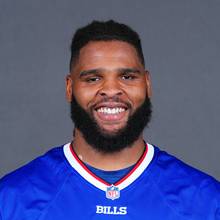 O'Cyrus Torrence70Grade
Torrence is a durable and massive right guard with huge hands, good play-strength and a firm anchor. His width and stiff punch make him difficult for power-rushers to work through, and his snatch-trap technique gives him a reliable answer to steal leverage in pass protection. As a run-blocker, Torrence is a sturdy presence that bumps down linemen on double-team feeds, collects movement across his face and uses a nifty jump-hook technique to reach frontside shades. Buffalo's progressively run-heavier structure has helped maximize his strengths while masking middling movement skills and below-average recovery when pulled out of position. Torrence is not a dynamic mover, but his size, anchor, strength and improving craft have settled him into solid starter territory.
10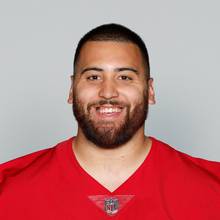 Dominick Puni71Grade
Puni pieced together another quality season in 2025, playing every snap for the second straight year and rebounding after a slower start that was partly tied to a preseason knee injury. Initially, the injury appeared to sap some of his ability to brace, absorb force and generate his usual power, but his play stabilized as the season progressed. Puni has a square, sturdy build with good linear explosiveness, foot quickness and enough play-strength to match up physically with most competition. His best reps show the size, balance and power that made him such an encouraging rookie starter, with the ability to create movement in the run game and hold his ground in protection when his posture and timing were right. Inconsistency remains on the technical side. Tardy strike-timing and a wide base can cause his feet to stall, leaving him vulnerable to compression or late losses against longer, powerful rushers. Those lapses are balanced by commanding wins when his leverage and hand-timing are clean. Puni is still refining his positional leverage, weight distribution and strike consistency. However, his durability, traits and early-career play indicate a solid young starter with further growth potential.
9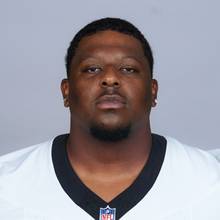 Cesar Ruiz72Grade
Ruiz missed three games last season with ankle issues. When available, he put together the most consistent season of his career. Ruiz showed real growth in pass protection, settling at his spot, playing inside-out on rushers and using improved strike-timing and placement to frame targets and stay in phase during isolated matchups. He was also cleaner sorting stunts, limiting the glaring breakdowns that showed up earlier in his career. In the run game, Ruiz used efficient aiming points, landmarks and footwork to latch, steer and stay attached rather than chasing displacement. That technical step forward allowed his stout frame, heavy hands and power to become more reliable assets. He's still not an elite mover or hand technician, but the steadier down-to-down execution pushed him into solid starter territory.
8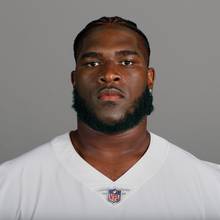 Tyler Booker72Grade
Booker put together a solid rookie campaign, starting 14 games at right guard after exclusively playing left guard at the collegiate level and missing three games with a high-ankle sprain. Booker is a massive interior blocker with very good width, length and heavy hands. He already understands how to maximize his frame in pass protection. He plays inside-out on rushers, funnels them into his body and uses his stout anchor to engulf most competition once contact is established. His size, strength and physicality allowed him to hold up against premier competition such as Jalen Carter. However, clean losses still showed up when his hands were late, causing him to get stood up and compressed into the pocket. His average redirect ability also shows up against loopers and movement on stunts. Booker is not a high-end mover, but he mitigates that inadequacy by running his feet, closing space and preventing defenders from stretching him into recovery mode. He already brings a nasty, tone-setting presence with the size, anchor and sustain skills to become a long-term quality starter if his hand-timing and processing skills continue to sharpen.
7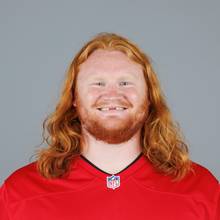 Cody Mauch75Grade
Mauch had his 2025 season cut short by a Week 2 knee injury. Even so, the sizable jump he made from 2023 to '24 appeared to carry over before his campaign ended. Mauch is a taller, sawed-off guard who can still get stunned and compressed by power down the middle of his frame. However, added weight and improved technique have helped him refit, re-leverage and survive those moments more effectively. His best traits are agility, strain and competitiveness. Mauch is a loose, twitched-up mover with excellent range, making him a weapon as a puller, climber and space blocker, while his balance and grip-strength have noticeably improved. He will not overwhelm down linemen with raw power, but his athleticism, strain and recovery ability point toward a good-starter profile when healthy.
6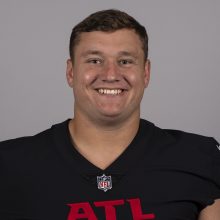 Chris Lindstrom76Grade
Lindstrom remained one of the league's most durable and dangerous run-blocking guards in 2025, but Atlanta's schematic shift over the last two seasons made his pass-protection limitations more visible. With the Falcons using far less play-action and exposing the line to more true dropback reps, Lindstrom's lighter frame and tardier anchor were stressed more often against high-end power. He remains an elite zone run-blocker, winning with rare quickness, leverage, leg drive and strain to reach landmarks, steer defenders and finish at angles most guards cannot access. The contrast is in pass protection, where his profile carries more variance. Lindstrom relies heavily on jump-sets and first meaningful contact to erase rushers' runway before they can build force, a strategy that is more forgiving off play-action than in static dropback situations. When he lands first, he can still close space and end reps quickly. When he misses or is forced to absorb power late, the losses can be immediate. In the right structure, Lindstrom's pass protection can play a tier higher, but his current profile is driven by elite run-game value and capped by the volatility of his true pass sets.
5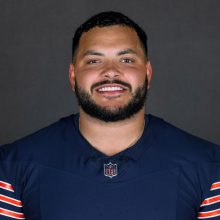 Jonah Jackson80Grade
Jackson reunited with coach Ben Johnson in 2025 after a disjointed one-year stint with the Los Angeles Rams and quickly reclaimed his status as a quality starter. Chicago's run-first, play-action-heavy structure was an ideal fit for Jackson's skill set, but he still maximized the environment with high-level, well-rounded play. His game is built on light feet, urgency and explosive intent, giving the Bears a movable interior piece that could pull, climb and create displacement on combination blocks. He formed a physical double-team pairing with Darnell Wright, generating movement in the run game, while allowing Johnson's scheme to lean into angles, timing and misdirection. In pass protection, Jackson is sturdy and active, using independent hands to jolt, stay attached and keep rushers from accessing his frame cleanly. The limitations show up when he gets caught flat-footed with a wide base against stutters, delaying his anchor, or when he overcommits to penetrators on stunts and is late redirecting to loopers. He is also more effective on combinations and movement concepts than isolated angle-drive blocks. Jackson is not a dominant physical presence, but his pass-protection competence, run-game urgency and familiarity with the system put him back into very good standing.
4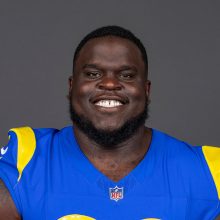 Kevin Dotson80Grade
Dotson remains one of the league's most physically imposing right guards, continuing to thrive inside a Rams system that fits his power-oriented game. Los Angeles' heavy play-action usage, downhill run menu and Matthew Stafford's quick trigger help reduce the burden of true dropback protection. Even so, Dotson's individual value remains clear. He is a stout, tone-setting guard with elite play-strength, firm anchor and the ability to halt rushers or uproot defenders once he establishes leverage. Dotson is not a high-end mover, but his footwork, angles and understanding of landmarks allow him to create sound positional leverage in pass protection and intersect targets on the move. In the run game, he is at his best covering up, displacing and caving defenders in tight quarters, giving the Rams a reliable source of interior force. His profile is not as recovery-based or expansive as the top-tier guards, but his size, power and scheme fit keep him entrenched as a very good right guard.
3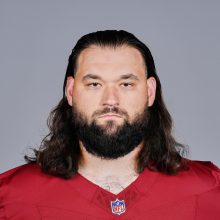 Sam Cosmi82Grade
Cosmi did not make his 2025 debut until Week 7 upon returning from the ACL tear he suffered during the previous season's Divisional Round. He then had this past season cut short by a concussion in Week 16. Across nine starts, he still looked close to the breakout-caliber player he became in 2024. Cosmi is one of the league's more talented guards, with the athletic ability, play-strength and recovery skill to match up against top interior competition. His pass protection serves as his foundation. He plays centered with even weight distribution, uses independent hands to stay attached without overcommitting and has the quickness to anchor, harden his edges and work out of compromised positions. Cosmi is also a good run-blocker, combining power and agility to create movement, fit angles and stay connected on the move. Availability is the only real drag on his profile after two significant injury interruptions during a 12-month span. At 27, he still has the traits and technical foundation of a top-tier guard, but his 2025 grade reflects a high-end player whose recent injury history prevents a cleaner placement.
2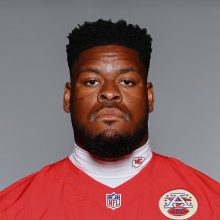 Trey Smith85Grade
Smith was limited to 12 starts in 2025 after suffering high- and low-ankle sprains late in the season, interrupting what had been one of the league's best durability profiles through four regular seasons and Kansas City's extended playoff runs. When available, Smith remained one of football's premier interior enforcers, pairing prototypical guard size with elite competitive toughness, heavy hands and immense raw power. His run-game value is rooted in displacement, strain and tone-setting physicality, with the ability to dent fronts and overwhelm defenders when his leverage is right. The most encouraging development was his pass protection, where his hand usage looked as balanced and controlled as it has been in his career. Smith found a better mix of patience and force on his creep-sets, using his heavy outside hand to initiate contact without overextending against wider alignments. That allowed him to play with cleaner posture, protect his edges and maintain better positional leverage against top interior competition such as Zach Allen, Jalen Carter and Jeffery Simmons. Smith can still tighten his strike-timing to protect his frame and find his anchor more quickly, but his 2025 film reinforced a complete, high-end guard profile whose only real caveat was availability.
1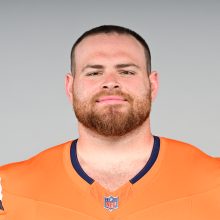 Quinn Meinerz90Grade
Meinerz is coming off his second consecutive first-team All-Pro season and has the film profile to support his place at the top of the right guard hierarchy. Built with rare density, natural leverage and explosive power, Meinerz is a force-of-nature run-blocker who can displace at the point of attack, climb with range and erase targets on the move across concepts. His blend of size, play-strength and movement skill gives Denver a true tone-setting presence. Growth in pass protection has been the difference over the last two seasons. He is not yet a pristine technician, but his anchor, quickness and improving strike plan have made him a high-end interior protector rather than merely an elite run-blocker. Meinerz will still invite some variance with his aggressive up-kick approach and strike-timing, but those same tools can disrupt rushers early and showed up against top competition such as Jalen Carter and Chris Jones. At 27, Meinerz is squarely in his prime and has already established himself as one of the new standard-setters at guard.