 The top experienced offensive linemen in pro football, graded and ranked by the B/R Scouting Department. Rookies to be graded separately.Player photos: AP Images
175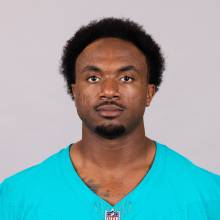 Austin Jackson51Grade
Jackson started just 14 games over the last two seasons due to lower-body injuries, including a torn meniscus in 2024 and toe injury in '25 that led Miami to restructure his deal into a one-year, prove-it arrangement. When available last season, Jackson remained volatile. He has enough size, heavy hands and initial power to jolt rushers or create first-level movement when his timing is right, but shaky body control and erratic hand usage routinely pull him out of position. He overcommits to defenders' initial paths, struggles to adjust as reps progress and lacks the recovery skill to save himself once beaten. Jackson's experience keeps him rosterable, but his recent availability and technical inconsistency place him closer to the backup tier than a dependable starting option.
174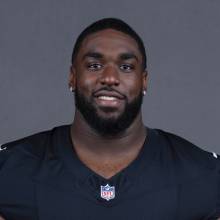 DJ Glaze51Grade
Glaze played every snap in 2025 inside a subpar Raiders environment, where a lethargic run game and frequent obvious passing situations lowered the floor of the entire offensive line. Glaze was particularly exposed in protection, where below-average movement and redirect skills led to too many glaring losses against higher-end rushers. He's a big-bodied, thick tackle with solid play-strength and flashes of halting power, but erratic pad level and strike-timing expose his chest, sap his leverage and create shaky body control. In the run game, Glaze has the dimensions and raw strength to cover up targets and create displacement in spurts, though his technique remains unrefined. His 2025 tape was mediocre. However, a more stable, offensive line-friendly structure under head coach Klint Kubiak offers some room for improved functionality this fall.
173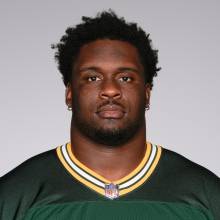 Anthony Belton52Grade
Belton completed his rookie season with seven starts, six at right guard and one at right tackle. The first-year blocker also worked through an ankle injury that cost him Weeks 4-7 and Weeks 9-11 after a reaggravation. Belton opened the year as Green Bay's primary backup right tackle before kicking inside to cover injuries, where his massive, densely built frame and considerable raw power stood out. He is a blunt-force blocker with heavy hands, pocket-clearing power when uncovered and knockout force against standstill targets. Issues present themselves regarding everything attached to control. His lumbering feet, lower-half tightness, erratic footwork and overreliance on pure power make it difficult for him to adjust to post-snap movement, line up targets and sustain. Green Bay's run-first, play-action-oriented system gives him a pathway to functional development, but the profile still carries a boom-or-bust quality regardless of environment.
172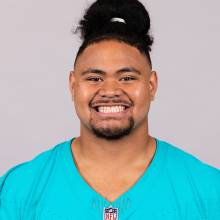 Jonah Savaiinaea52Grade
Savaiinaea started all 17 games and did not miss a snap as a rookie, but his durability was the clearest positive during an uneven transition to left guard. The move inside and jump in competition exposed an underdeveloped pass-protection baseline, with persistent oversets, late hands and poor positional leverage. His mass and raw power flashed in the run game, especially on doubles and down-blocks where he could surge and displace defenders in the post. Consistency remained problematic. The first-year blocker often leaned into contact without closing space with his feet, causing overextension late in reps and an unreliable hit rate on climbs. A 2026 move to right guard at least returns him to his collegiate side, creating some optimism. However, his hand usage, leverage and footwork need major growth.
171 Teven Jenkins52Grade
Jenkins started four games in 2025 but frequently entered via spot duty and as a sixth offensive lineman. Jenkins is a thickly built guard with solid length and play-strength, and prior years showed flashes of immense finishing power. A serviceable size/power profile worth carrying as depth still exists, but accumulated wear has diminished his movement skills and overall control. His upright playing style and clunky footwork sap his sustain, creating soft edges and quicker disengagements in the run game. Those issues also bleed into pass protection, where erratic hands expose his frame, delay his anchor and leave him vulnerable when forced to redirect. Jenkins still has enough size, physicality, versatility and power flashes to warrant a backup role, but the body control and movement decline keep him below dependable starter level.
170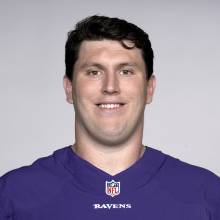 Andrew Vorhees53Grade
Vorhees is a sawed-off, hard-nosed blocker whose best work comes in tight quarters, especially when he can close space early, fit his hands and strain through contact. He can eliminate rushers' runway with jump sets and create quick leverage when he lands first, while showing enough awareness to find work and cover up adjacent rushers when uncovered. The limitations are physical and persistent. Vorhees lacks the athletic ability to consistently redirect, sustain or re-leverage defenders once reps extend, leaving him overextended late and vulnerable when defenders work off his frame. In pass protection, he can survive when he wins early, but isolated reps expose his lack of range, recovery skill and margin for error. His toughness, short-area leverage and awareness give him some interior depth value, but the current profile is closer to a backup guard than a dependable starter.
169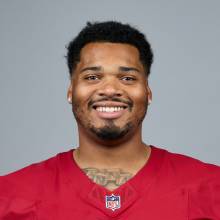 Elijah Wilkinson53Grade
Wilkinson started every game in 2025 for the first time in his nine-year career after the Atlanta Falcons lost their top two right tackles before the season began. That availability helped earn him a two-year deal with Arizona, where he enters 2026 as the presumed starter. Wilkinson is a wide-bodied, thick tackle with good length and enough run-game utility to function in a zone-heavy structure. He's at his best firing off the ball, getting on track and overrunning targets within the flow of the play. Pass protection is the problem. Wilkinson struggles to redirect, recover and shore up movement across his face, leading to too many clean losses when isolated. His size and run-game fit give him spot-starter value, but the pass-protection leakage makes him best suited for a protected role inside a play-action-based system.
168 Trevor Penning54Grade
Penning converted from tackle to guard in 2025, starting six games for the New Orleans Saints before being traded to the Chargers and starting four more to close out the season. A 2022 first-round pick, Penning still has not found consistent footing with his footwork, timing or hand usage, and the move inside did not eliminate those issues. He remains a rare finisher when his landmarks and leverage align, with the raw power and demeanor to impose his will, bury defenders and create highlight-level movement in the run game. The problem is that those flashes are surrounded by too much volatility. His pass protection remains subpar because unreliable technique too often diminishes his size and power, leaving him late to contact, off balance or unable to consistently control rushers. Penning can provide emergency value because of his experience at tackle and guard, but his current profile is closer to a backup/swing option with rare finishing flashes than a dependable starter.
167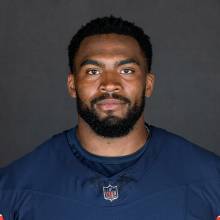 Braxton Jones54Grade
Jones started just four games in 2025 before an October knee injury ended his season, continuing a multi-year pattern of availability concerns after his 17-start rookie campaign. On the field, Jones trended toward a swing-tackle profile due to below-average range, recovery ability and pass-protection margin. He is not a fluid mover, and his lack of range shows up on an island, where wider alignments and speed threats can force him into early stress. His anchor is more adequate than firm, leaving him vulnerable to pocket compression when rushers can build power through his frame. Jones' best value still comes in the run game, where his size and natural play-strength allow him to cover up defenders and generate movement on down blocks, vertical doubles and downhill concepts. He is not a tackle a team wants exposed to a heavy diet of true dropback reps, but his frame, power and experience give him enough utility to function as a swing tackle or short-term stopgap.
166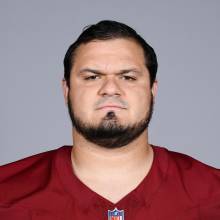 Nick Allegretti54Grade
Allegretti started four games in 2025, with two early starts at right guard and two at center in Weeks 17 and 18. Allegretti displays below-average physical tools but plays with a gritty, hard-nosed style that gives him value as a combination blocker and interior jump-setter. He strains to stay attached and can keep reps alive with effort, timing and hand activity, but limited movement skills and power show up when he has to redirect against counters, finish late in reps or track smaller targets in space. Allegretti has the inside track to start at center, which would be his second full-time starting season and first at the pivot. An under-center, play-action-oriented system under coordinator David Blough gives the lineman a path toward serviceable short-term play, but his capped physical profile still fits best as a swing interior backup.
165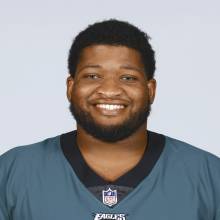 Fred Johnson55Grade
Johnson started eight games in 2025 then re-signed with the Eagles on a one-year deal after providing functional swing tackle play. Johnson is a massive, heavy-handed and high-cut tackle who has improved his patience, leverage and strike-timing under previous offensive line coach Jeff Stoutland. When balanced, the 29-year-old veteran can stay inside-out, land a stiff punch, widen rushers and force them to take the long route. However, middling movement skills and lower-half stiffness leave him slow to redirect and vulnerable to being manipulated out of position on an island. In the run game, Johnson can cover up and wash down targets on angle-drive blocks, but he plays high and gets out-leveraged against movement across his face. He remains a useful spot starter but not a primary solution.
164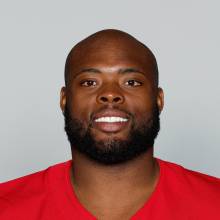 Robert Jones55Grade
Jones missed all of the 2025 campaign after suffering a broken bone in his neck. He then signed a one-year deal with the 49ers this offseason. His projection is largely tied to his 2024 tape with the Miami Dolphins, where he started 17 games and showed the strength, power and physicality that provided projectable upside. Jones is a thick, heavy-handed guard with a firm anchor and real people-moving ability when he catches defenders on angle-drive blocks or works downhill. He can also provide pocket-clearing force when uncovered. Movement and control are limiting factors. False steps and adequate athletic ability leave him late on backside zone tracks, while his aggressive pass-protection approach shrinks the margin for error with leverage and strike-timing. If healthy, Jones gives the 49ers useful depth, strength and physicality, but his best fit remains as a backup guard who can spot start in a downhill, quick-game/play-action structure.
163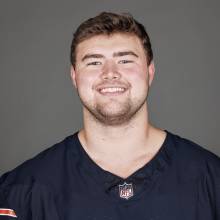 Ozzy Trapilo55Grade
Trapilo appeared at right tackle in one game and worked as a sixth lineman over the first 11 weeks of his rookie season before starting six games at left tackle and rupturing his patellar tendon during his first postseason appearance. Trapilo looked most comfortable in his lone appearance on the right side, while his left tackle tape was predictably uneven. He repeatedly floated past his spot in protection, swung open his hips, redirected late and allowed rushers to pry open his inside shoulder. Chicago mitigated some of these issues with extensive schemed help, but his mediocre movement skills were still easy to manipulate. In the run game, Trapilo is serviceable on combination blocks, using his size and solid hand placement to cover up and wash down targets, but below average foot quickness and high pad level limited his backside cut-off range and sustain when isolated.
162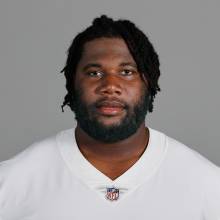 Nate Thomas56Grade
Thomas made four starts at left tackle during his second professional season, while also seeing spot duty at right tackle. He displayed intriguing physical traits but unreliable execution. Thomas is a big, stout tackle with heavy hands and good in-line power, allowing him to uproot defenders when he catches them on his track during double-team feeds, angle-drive blocks and climbs. He also presents enough build-up speed to lead around the edge and help secure perimeter lanes. His technique remains robotic and raw, though. Thomas will drop his eyes at the point of attack when the picture changes, cross his feet when expanding against high-side rushes and lose cleanly when forced into recovery mode. His worst reps are glaring enough to keep him below everyday-starter level. After missing his entire rookie season with a knee injury and entering the league as an inexperienced lineman, his power profile does leave room for development.
161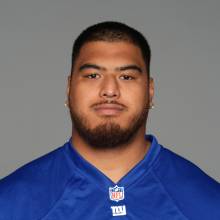 Daniel Faalele56Grade
Faalele is a massive, space-eating guard who has not missed a snap over the last two seasons, giving him real dependability despite a capped profile. The 6'8", 380-pound blocker understands how to maximize his size in pass protection with short, inside-out sets that force rushers down the middle of his frame or make them take the long path. This approach can function inside a rhythmic, quick-hitting passing game, but it also creates soft, accessible edges when rushers can stress his foot-speed, force late movement or make him recover after initial contact. In the run game, Faalele walls off targets on angle-drive blocks and covers up slower-processing linebackers at the second level, but he struggles to redirect and intersect movement across his face or sustain when defenders make him adjust in space. His size, durability and ability to keep simple reps orderly give him value, but the movement limitations place a hard cap on his ceiling.
160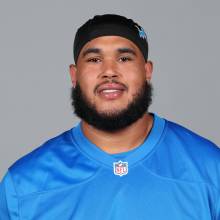 Larry Borom56Grade
Borom started a career-high 11 games in 2025 during his lone season in Miami and functioned as a serviceable right tackle inside Mike McDaniel's quick-hitting passing game. Borom is a wide-bodied blocker with enough mass and anchor to survive when protected by structure and schemed help. In the run game, he can shield defenders on angle-drive blocks, but he lacks consistent displacement, hand-control and sustain. His below-average redirect skills leave little margin for error, and rushers can progressively access his edges as reps extend. Borom profiles best as a swing tackle or spot starter who can survive in a quick-game, help-oriented environment.
159 Andrew Wylie56Grade
Wylie filled in for five starts at right guard during the 2025 campaign, adding to a career with 100-plus starts, valuable postseason experience and proven versatility. Wylie is a quality swing backup and spot starter at multiple positions, with his best current fit likely inside at guard. He plays with an alert, crafty approach, adequate play-strength and enough functional athletic ability to keep the offense on schedule for short stretches. His processing helps him stay in proper positional leverage relative to the intent of the play, and he generally understands how to minimize exposure. Limitations show up when he is forced into space or isolated against quicker, wider-aligned rushers who can evade his initial strike, causing him to step under himself and struggle to recover from compromised positions. He remains a useful, experienced reserve rather than a full-time answer.
158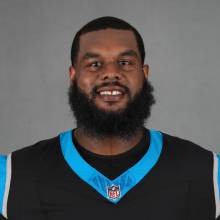 Rasheed Walker56Grade
Walker already outperformed his seventh-round draft slot with extensive starting experience, including 48 starts over the last three seasons. However, his profile remains closer to a low-end starter or high-end swing tackle than a foundational blindside protector. The Green Bay Packers' condensed formations, tight-end alignments, chips and play-action-oriented structure helped manage his exposure, reducing the number of true island reps where his leverage and anchor limitations were likely to show. Walker has the size, natural strength and grip strength to control reps when he lands first meaningful contact, but his strike-timing and placement are inconsistent. He often plays upright with late, high hands, which exposes his chest, compromises his anchor and allows power to compress the pocket. In the run game, he brings physicality and strain, but inconsistent pad level and hand-placement limit how often he can generate and sustain movement at the point of attack. Walker's availability and experience give him value, especially in the right structure, but the technical volatility and pass-protection ceiling keep him below the dependable-starter tier.
157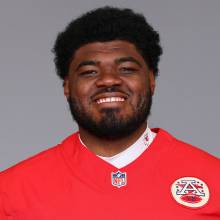 Jaylon Moore56Grade
Moore started six games during his first season in Kansas City, seeing time at both tackle spots and serving as a sixth offensive lineman in heavy formations. Moore is a controlled, assignment-sound blocker, who generally arrives at landmarks on time and can shield defenders within the flow of the play. Those traits help offset below-average power and movement skills, which show up on solo drive/base blocks and inconsistent second-level sustain. In pass protection, he is best with schemed help that funnels rushers into his large hands and solid placement, allowing him to latch and force counters. Without help on obvious passing downs, his limited range and anchor create more volatility. Moore profiles best as a swing tackle rather than a dependable starter.
156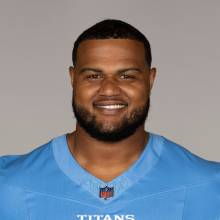 Dan Moore Jr.56Grade
Moore maintained his durability during his first season in Tennessee, but his on-field performance took a step back from his career-best 2024 campaign. The change in environment mattered. Moore saw a heavier pass-protection workload, less play-action support and a rookie quarterback in Cam Ward who struggled to prevent pressures from turning into sacks. Still, Moore's individual pass-protection issues were clear. His anchor was subpar against speed-to-power, and erratic footwork in his sets created routine oversets, soft inside access and quick losses. His strike-timing and hand placement also regressed, shrinking his margin for error against higher-end competition. In the run game, Moore remained a functional placement blocker with enough movement skill to track smaller targets and execute on the move, but he did not provide enough displacement or physical control to offset the pass-protection leakage. Moore's durability and prior baseline leave some room for a rebound season under a new staff, but his 2025 tape places him closer to a low-end starter than the solid mid-tier profile he previously showed.
155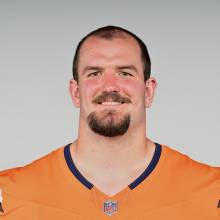 Alex Forsyth57Grade
Forsyth served as a quality backup center during his first two seasons, including three starts during the 2025 campaign with one coming in the Divisional Round. Forsyth has good size for the position and wins with processing, toughness and an understanding of how to operate within himself to keep the offense on schedule. He's alert in protection, plays on time and uses efficient, strong hands to stay connected when his landmarks are clean. Below-average square power and movement skills cap his ability to create displacement, recover late or handle high-end athletes in space, but his smarts, toughness and assignment reliability keep him rostered as a dependable interior reserve.
154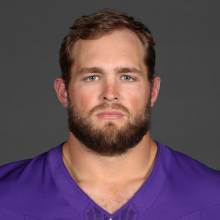 Blake Brandel57Grade
Brandel started nine games in 2025 across center, left guard and right tackle after a career-high 17 starts at left guard during the previous season. Brandel has a lean, angular build with minimal sand and an upright playing style, leaving him with below-average play-strength and limited point-of-attack power. He wins more with solid athletic ability, quickness and active hands, allowing him to refit, recover, climb to intersect backers and die slowly enough to keep the offense on schedule. His profile fits best in outside zone, play-action and protection plans, which give him guard help rather than extended isolated matchups. His narrow frame and upright posture limit his ability to command the point of attack or finish with authority, but his movement skills, dexterity and a full offseason to adapt to center give him a path to serviceable starter-level play.
153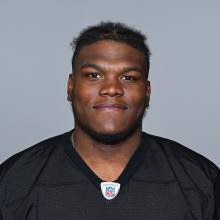 Broderick Jones57Grade
Jones showed modest improvement in 2025 before a severe neck injury ended his season and created significant uncertainty entering the 2026 campaign. His pass protection was more controlled than prior seasons, but much of the perceived improvement was aided by Aaron Rodgers' quick trigger and Pittsburgh's heavy use of 12/13 personnel to build in help. Jones remains a solid mover with pop in his hands, but his technique remains too erratic. He will duck his head, throw his hands into contact and open quick access across his face, while his run-game sustain is inconsistent once defenders survive initial contact. The injury setback, declined fifth-year option and addition of Max Iheanachor all reflect the volatility of his status. Jones still has starter-level traits, but his current profile is an inconsistent, guardrail-dependent tackle with major health and reliability concerns.
152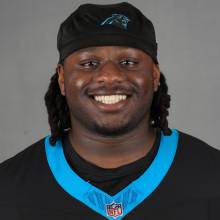 Ikem Ekwonu57Grade
Ekwonu started 15 games last season before suffering a ruptured patellar tendon during the Panthers' Wild Card loss. The injury clouds his availability for 2026 and explains the Panthers' offseason additions of Rasheed Walker and first-round pick Monroe Freeling. Even before the injury, Ekwonu's play remained too inconsistent to lock him in as a long-term answer at left tackle. His pass protection was undermined by erratic set lines, uneven positional leverage, late strike-timing and balance issues, leading to too many quick losses on the high side, through the middle and inside against counters. He has the raw power and stiff punch to jolt rushers when everything lines up properly, but he has not consistently found the landmarks or timing needed to control reps. In the run game, Ekwonu's power shows up more clearly, with the ability to generate force, dent defenders and jar linebackers upon arrival. Sustainability remains an issue. His pads rise, his balance leaks and defenders who survive his initial power can slip, push-pull or work off his frame. Ekwonu now faces a long recovery without the recent film quality to guarantee a starting job when he returns to the field.
151 Walker Little57Grade
Little started 14 games in 2025 and opened the year as Jacksonville's left tackle before a Week 13 concussion allowed Cole Van Lanen to seize the job. Little returned in Week 16 and moved to right guard after Patrick Mekari's back injury, then moved back to left tackle in Jacksonville's Wild Card contest after Van Lanen went down. Little's value is built on adequacy across multiple spots than a true starter's trump card. He has enough size, play-strength and quickness to withstand power, cover up targets in the run game and intersect on the move. Although, his below-average range and inconsistent set expansion leave him stressed against wide rush alignments. He is not an overwhelming blocker and lacks the recovery profile to trust as an everyday left tackle. Even so, his versatility and baseline tools make him one of the league's better swing linemen.
150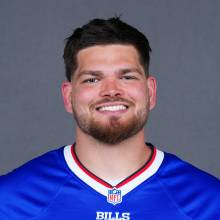 Alec Anderson58Grade
Anderson has six official starts during his first two seasons, though three came as a sixth offensive lineman, with additional work at left guard, right tackle and center. He enters 2026 slated to compete with Austin Corbett for Buffalo's left guard job. Anderson is a scrappy blocker with excellent competitive toughness, good grip strength and a knack for finding ways to finish in the run game through latch strength, leg drive and strain. His active hands help him create leverage and stay attached, but the projection is clouded by limited exposure, especially in pass protection, where he has only a few dozen meaningful true dropback reps at guard. Anderson has enough size, toughness and hand strength to contribute. Until he gets extended snaps, his best usage remains as a versatile interior backup with low-end starter upside.
149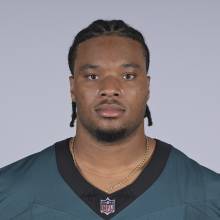 Tyler Steen58Grade
Steen started all 17 games during his third career season and first as a full-time starter, providing serviceable run-game play but remaining a liability in pass protection. Philadelphia's offense took a step back around him. Healthier versions of Lane Johnson and Cam Jurgens, plus a more play-action-heavy structure, could give Steen a better runway this fall. Still, Steen's individual limitations were obvious. In the run game, he has enough initial burst, density and pop to cover up defenders and feed down linemen on double-teams, but his sustain and body control fade when defenders move across his face. Those same issues carry into protection, where unrefined footwork causes him to drift past his spot against wider alignments, opening a soft inside shoulder and delaying his transition into the anchor. Late strike-timing, slow recognition skills and modest length also give rushers easier access to his edges and adjacent gaps when he has to sort through stunts, games and blitzes. Steen's first full year as a starter leaves plenty of room for growth, especially in a friendlier offensive structure, but his 2025 tape displayed a below-average starting guard.
148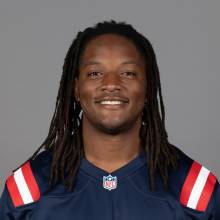 Jared Wilson58Grade
Wilson moved from center to left guard during his rookie season and finished the campaign with 13 starts, while also working through a high-ankle sprain and concussion. Wilson was a twitched-up, light-in-the-pants interior blocker with clear movement talent but an undeveloped skill set. His quickness showed up climbing to intersect linebackers and redirecting to mirror defenders in space, giving him flashes that few centers in this range can match. The problem was everything attached to play-strength, timing and processing. Wilson's erratic hands and footwork exposed his frame, allowing defenders to take ground, while his late recognition left him slow to pass off or pick up basic stunts and twists. A move back to his natural position over the ball should give him more combination-block opportunities and fewer isolated matchups, creating a cleaner path to accentuate his athletic ability and quickness.
147 Alex Palczewski58Grade
Palczewski has taken a notable path from 64-game starter at Illinois to undrafted free agent to useful Broncos reserve, filling in at multiple spots over the last two seasons, including 10 starts at left guard in 2025. Palczewski is densely built with efficient footwork and good hand usage, doing a nice job staying inside-out and centered through contact to latch, steer and play firm. His lower-half stiffness and robotic style cap his recovery range, leaving him late to redirect when defenders access his edges or bypass his initial punch. He is not overly dynamic or powerful, but the technique, toughness and positional flexibility give him functional depth value. His 2025 tape had shades of a poor man's David Edwards, in that he wins similarly with density, efficient feet, hand usage and centered contact, making him a useful developmental reserve.
146 Aireontae Ersery58Grade
Ersery started 16 games as a rookie with uneven results, flashing enough size, power and physicality to project growth, while still looking like a tackle who needs protection structure to function cleanly. His dense build, heavy hands and competitive demeanor showed up when his timing and placement were right, allowing him to anchor on command, jolt rushers and create movement in the run game. He also offered useful bursts on the move, particularly leading around the edge and clearing lanes off his backside. The problem stemmed from instability when isolated. Ersery's erratic footwork, inconsistent strike-timing and shaky contact balance led to glaring losses against both speed and power, especially versus quality edge-rushing competition. Houston's extensive schematic help in the playoffs—chips, tighter formations and more confined pass-protection environments—provided the clearest template for how to maximize him early. Ersery has the mass, play-strength and temperament to emerge as a functional starter, but his hand usage and recovery profile must improve before he can be trusted on a heavy diet of true island reps.
145 Jonah Monheim59Grade
Monheim was chosen in the seventh round of the 2025 draft and started two games as a rookie while also filling in during several short stints. Monheim is a severely undersized center with good movement skills, play-speed and an urgent, alert style. He understands the intent of concepts, provides timely help when uncovered and has the quickness to overtake combinations or climb and intersect linebackers. In protection, Monheim uses independent strikes to disrupt rush-timing and help offset his lack of length, but his narrow frame and middling power leave him vulnerable to compression when isolated. He faces an uphill battle protecting his edges and holding ground against NFL defensive tackles. Even so, his movement skills, processing and versatility give him useful pivot depth with spot-start potential, especially if flanked by powerful guards.
144 Jamaree Salyer59Grade
Salyer started five games in 2025, splitting time between left tackle and right guard for an injury-decimated Los Angeles Chargers line before signing a free-agent deal with the Dolphins. Salyer is a shorter tackle with solid length, tremendous mass and crafty hand usage, allowing him to keep defenders in front of him and mitigate below-average redirect and recovery skills. His controlled footwork, independent hands and understanding of angles help him maximize his frame in protection, though quicker rushers can still stress him when forced into sudden recovery. In the run game, Salyer can move people when working linearly and catching defenders on his track. However, he lacks the short-area quickness to consistently sustain when the picture changes post-snap. His toolkit and positional flexibility give him functional value as a quality swing backup with low-end starter capability.
143 John Michael Schmitz Jr.59Grade
Schmitz worked through multiple injuries to start 13 games last season as part of a run-heavy Giants offense that lowered the pass-game exposure from his first two campaigns. The structure helped quiet his middling athletic ability and movement skills, allowing his leg drive, grip-strength and strain to carry more of his performance. Schmitz is an adequate pass protector who can be picked against twists and will step under himself when redirecting against moves across his face, creating soft edges. When centered, he is difficult to work through once latched and can turn reps into a slog for defenders trying to disengage. In the run game, his sustain skills and effort help impede shed attempts, though his subpar foot quickness limits his range. Schmitz is a limited athlete, but he can provide functional play in a run-heavy structure that reduces how often he has to operate in space.
142 Garrett Bradbury59Grade
Bradbury started every regular-season game for the second straight year, recorded zero penalties for the first time in his career and reached 20 total starts during the New England Patriots' run to Super Bowl LX. Chicago traded for him this offseason after Drew Dalman's sudden retirement, giving the Bears a veteran pivot with proven durability. Bradbury is a squatty, sawed-off center with fluid movement skills, quick processing and strong zone-run utility, excelling on reach/overtake blocks while sorting stunts and games on time. A lack of power remains the limiting factor. His lack of mass and play-strength create marginal anchoring ability, leading to compression and displacement when isolated against nose tackles in protection or drive-blocking scenarios. Bradbury is reliable and experienced, but his skill set is narrow, projecting best as a serviceable starter in a zone-oriented, play-action-heavy system.
141 Warren McClendon Jr.59Grade
McClendon started 10 games at right tackle last season for the injured Rob Havenstein and provided functional play inside the Rams' play-action-heavy, offensive line-friendly structure. Matthew Stafford's 2.73-second average time to throw helped mitigate the 25-year-old's below-average athletic ability and range. McClendon has a sturdy build, good length and enough play-strength to keep the offense on schedule. In pass protection, he plays centered with a high outside/low inside hand carriage to clamp high-side rushes, anchor against power and disrupt slower-developing moves. Issues appear when isolated against higher-end rushers, where limited range and dropping his outside foot can open him to clean inside counters. In the run game, McClendon plays firm, covers up targets and maintains balance well enough to occupy defenders. His brief left tackle work in 2024 was shaky, but his '25 film provides a path toward being a functional starter after Havenstein's retirement.
140 Evan Brown60Grade
Brown started 11 games at left guard for the Arizona Cardinals, while working through lower-body injuries and taking a personal absence. Brown has now started at least 11 games in each of the last five seasons across left guard, center and right guard. He is a squatty blocker with good natural leverage, quickness and enough play-strength to work inside defenders and create initial displacement in the zone run game, while also offering value as a puller in gap concepts. His lack of mass and mediocre length create soft, accessible edges when isolated in pass protection, but his clear eyes and burst allow him to provide timely, firm help when uncovered. Brown's run-game utility, versatility and experience make him a valuable sixth lineman.
139 Patrick Mekari60Grade
Mekari started 14 games in his first season in Jacksonville despite concussion and back issues, once again showing the versatility that has defined his career. He is more useful than impactful as a crafty, hard-nosed lineman with enough athletic ability, leverage understanding and hand activity to make defenders work. His experience across the line gives him roster value, but he functions best in a run-first scheme that limits true dropback exposure. Mekari is sawed off with a shaky anchor, shrinking his margin for error with strike-timing and placement, leading to clean losses across his face when his hands are late or off target. He can spot start across multiple positions, though. Still, the lack of power and down-to-down stability keep him below dependable starter level.
138 Robert Hainsey60Grade
Hainsey provided functional play during his first year in Jacksonville, starting 15 games last season. He wins with quickness, awareness and timing more than size or power, getting into fits on schedule and offering some pop in the run game when working zone combinations or climbing to the second level. The limitations show up when he has to generate movement on his own, where he can get stalemated on base and angle-drive blocks with accessible edges late in the rep. In pass protection, Hainsey is alert and active with good hand placement, helping shore up the A-gaps when working with support. His sawed-off, narrow build limits his anchor, creating variance when isolated against power. Even so, his quickness, awareness and active hands give him enough functional value to hold up as a low-end starter.
137 Ryan Neuzil60Grade
Neuzil gradually developed into Atlanta's starting center since arriving as a sawed-off undrafted free agent in 2022. He became a full-time starter for the first time in 2025 and didn't miss a snap. Neuzil lacks the mass and girth to command the point of attack when isolated against hulking nose tackles, and his anchor can get stressed when asked to shore up the A-gaps against late loopers or interior power. But he plays with enough snap, toughness and contact balance to pack a punch in the run game and provide help when uncovered in protection. Neuzil is an efficient combination blocker who is better at solidifying lanes than creating or maintaining them himself. Still, his awareness, timing and ability to keep the offense on schedule give him low-end starter value.
136 Alaric Jackson60Grade
Jackson established himself as a functional starter inside the Rams' ultra-friendly offensive structure, which limits true dropback exposure through heavy play-action usage and Matthew Stafford's quick trigger. Jackson is a wide, heavy-bodied and sawed-off tackle with below-average movement skills. Still, he has enough play-strength and craft to survive when the rep stays on his terms. In pass protection, he wins with a stiff punch to halt rushers, clamp into their frame and disrupt timing, especially off play-action or when mixing in changeups such as his vertical-to-jump set. Those tools mitigate his tendency to drift and float off his spot when threatened with speed, which can open a soft inside shoulder and leave him vulnerable across his face. In the run game, Jackson is sturdy enough to shore up lanes on doubles and down blocks, but his body control and space ability are limited. He can overextend or lose quickly on kickouts and second-level blocks when forced to navigate movement. Jackson's size, punch and play-strength give him functional starter value, though the movement limitations and reliance on environment keep the ceiling firmly capped.
135 Dylan Cook61Grade
Cook saw his first extended NFL action in 2025 and filled in admirably after taking over as Pittsburgh's left tackle in Week 15. A former '22 undrafted free agent, Cook showed better pass-protection feel than expected, especially with his positional leverage, strike-timing and ability to use a snatch-trap technique for clean wins. He is sturdily built with solid movement skills and enough pop to create jolt when his hands land on time. Limitations show up more in the run game, where he can lean into contact, lose balance when the picture changes post-snap and get shed before sustaining. He did show value on combinations, overtakes and widening lanes once latched. Cook's five-start stretch gives him legitimate swing-tackle value, though the profile still reads more like a quality reserve than a stable starter.
134 Danny Pinter61Grade
Pinter made one start at center in 2025 with another near-complete game, bringing him to 10 career starts since entering the league as a 2020 fifth-round draft pick. Pinter is a sawed-off, squatty center with fluid movement skills, good hand usage and enough sustain skill to keep blocks alive. His lack of mass and raw power can get him compressed when isolated against power down the middle of his frame, and he is vulnerable to getting picked by penetrators. But he does a very good job creating leverage with his hands, closing space and running his feet to stay attached. Pinter is not an overwhelming physical presence, but he maximizes his frame with technique, strain and quickness. Baltimore's zone-oriented scheme and lack of an established starter give him his clearest path to become a full-time contributor.
133 Cole Strange61Grade
Strange entered the lineup in Week 4 and brought stability over 14 starts, putting together the best season of an otherwise disappointing career. His value is rooted in quickness, body control and scheme fit, with the movement skills to reach, cut off the backside, climb to backers and function as a puller in a zone-heavy run game. In pass protection, Strange leans on jump-sets to eliminate rushers' runway and help offset below-average play-strength, while staying alert when uncovered to provide a thump on adjacent rushers. He remains scheme-dependent, though. Head-up power can stalemate or compress him, and his anchor is not sturdy enough to consistently survive without structure. Following Mike McDaniel from the Miami Dolphins to the Chargers gives him a realistic path to maintaining the recently established functional level.
132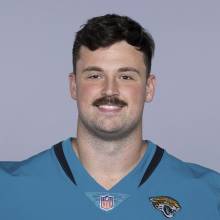 Ezra Cleveland61Grade
Cleveland played his best football since arriving in Jacksonville, including 16 starts in 2025. Even so, his profile remains volatile. Cleveland has become more controlled than he was earlier in his career—taking fewer chances and staying centered more often—yet his upright posture, erratic balance and shaky body control still create problems. Shifty defenders can evade his initial punch, leaving him flat-footed, late with his hands or overextended in recovery. He does have useful power when uncovered, where he can cave adjacent rushers and hold up in tight quarters, but the down-to-down consistency remains uneven. Cleveland's improved control gives him functional starter value, but the boom-or-bust element keeps him firmly in the below-average starter tier.
131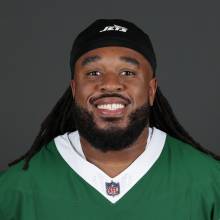 Dylan Parham61Grade
Parham has been a durable, position-flexible interior lineman through his first four seasons, missing only five games while splitting most of his work between both guard spots. He is a narrow-framed blocker with natural leverage and enough pop through his hands and hips to create movement when he lands cleanly. That force also shows up when he is uncovered in pass protection, where he can help reset space and clear the pocket with timely contact. However, his profile keeps him inconsistent once reps extend. Parham does not consistently sustain or steer through contact, and his softer edges in pass protection leave him vulnerable when isolated against rushers who can cross his face, stress his anchor or force him into late recovery. His movement skills and play-strength are functional, but neither trait is strong enough to consistently erase those issues. Parham's durability, guard flexibility and flashes of leverage-based power give him roster value, but his current profile fits better as a quality interior backup or short-term starter than a dependable every-down solution.
130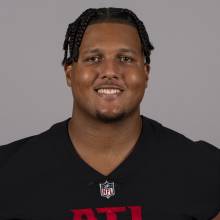 Matthew Bergeron61Grade
Bergeron started 15 games in 2025 while dealing with a midseason ankle injury. His third-year profile remained fairly stagnant, too. Bergeron is a densely built, wide-bodied blocker with solid length, good upper-body strength and heavy hands that create jolt when his timing and placement sync. However, his upright posture, choppy redirect skills and erratic hands routinely sap his leverage, soften his inside shoulder and leave him late to recover. In the run game, he remains an imposing straight-line presence with power on his track, but his body control and sustain are inconsistent against movement. Bergeron still flashes starter traits. Even so, the technical stagnation leaves him as a below-average starter whose best projection remains inside a run-first, play-action-heavy structure that lets him play downhill.
129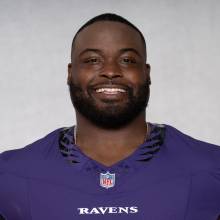 John Simpson61Grade
Simpson remained a durable, physical presence in 2025, extending his run of consecutive 17-start seasons while bringing his usual size, length and tone-setting demeanor to the interior. At 6'4" and 330 pounds with long arms and heavy hands, Simpson can cover up defenders, create jolt on contact and deliver forceful body blows when uncovered or working downhill. Once latched, he is difficult to work through and has enough raw mass and power to tilt the line of scrimmage. However, his game remains more physical than controlled. Simpson's below-average body-control, balance and sustain skills lead to slipping off too many blocks late in the process, especially when defenders force him to adjust in space or work across his face. In pass protection, he can hold up when square and connected, but his mirroring limitations and recovery range leave him vulnerable when isolated against quickness. Simpson's durability, size and demeanor give him functional value as a tone-setting guard in the right structure, but the lack of polish and inconsistent control keep him closer to a low-end option than a dependable every-down answer.
128 Ethan Pocic61Grade
Pocic now has 99 career starts after his most recent four-year stint with the Cleveland Browns, which ended after he sustained a season-ending Achilles tear. After getting medically cleared in July, the veteran snapper signed with the Ravens shortly thereafter. At 6'6", Pocic is a tall center with good length, solid play-strength and adequate athletic ability. His experience shows up in his quick processing skills and crafty, sound technique seen in his spacing, timing and ability to square up defenders on combination blocks. His below-average lateral quickness and tendency to drift against wide rush alignments lead to soft, accessible edges. In the run game, he lacks the power to uproot down linemen by himself but works well in unison on combos with the necessary sustain and steer skills to overtake effectively. Pocic's recent Achilles injury coupled with his age (31) create some questions about his burst and anchor being diminished. Even so, he should remain a functional starter inside Baltimore's familiar zone-oriented system.
127 Elgton Jenkins61Grade
Jenkins signed with the Browns this offseason after starting nine games at center for the Green Bay Packers last season. A fractured fibula ended his campaign. His 2026 position remains unsettled, with center still a strong possibility. Jenkins projects better at guard, where the best stretches of his career have come and where his grade would likely be higher. At center last season, his movement skills looked diminished and he struggled to gain space off the line in pass protection, creating persistently soft edges. Jenkins still showed the stiff punch, instant clamp and play-strength to end reps quickly once latched, and his size/power can blot out defenders in the run game. However, the space limitations, recent injury and positional uncertainty cloud his 2026 projection.
126 Dillon Radunz62Grade
Radunz stabilized over the last two seasons after struggling to find a technical baseline earlier in his career. He started 10 games for New Orleans in 2025, missing six with a toe injury, but played solid football when available and earned a new two-year deal as the Saints' primary interior backup. Radunz is a lean and long guard with good movement skills and a high-low hand carriage/strike package that helps him frame rushers, create lift and make his anchor passable rather than a liability. However, he can still chase setup moves, drift and fall into recovery mode too often when isolated. In the run game, Radunz is fluid climbing and quick enough to get into initial fits on time, but his lack of mass and below-average play-strength cap his ability to finish. He profiles as a useful spot starter/interior reserve.
125 Caleb Rogers62Grade
Rogers entered the Raiders' lineup in Week 13 and started the final six games, putting enough tape together to compete for the full-time job in Klint Kubiak's system. The 2025 third-round draft pick is a sawed-off, sturdy guard with solid play-strength, good power, above-average movement skills and a fiery, physical demeanor. Those traits showed up through a jarring punch, pocket-clearing force when uncovered, the burst to uproot down linemen and enough range to intersect targets on the move. The second-year blocker must refine his technique, though. Raw footwork and rigid hand usage limited his ability to adapt and recover when isolated in protection, while leading to overextension and shaky balance on base and angle-drive blocks. Rogers' physicality, traits and improved ecosystem give him a viable path to earning a starting job, but his technique must stabilize.
124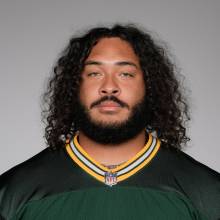 Jordan Morgan62Grade
Morgan started 12 games in 2025, primarily at right guard as part of a rotation, while also logging snaps at both tackle spots. That constant movement in and out of the lineup has slowed his development. Now, he is expected to get the first crack to start at left tackle in 2026 despite barely playing there through two NFL seasons. Morgan is a stoutly built blocker with heavy hands, good play-strength and a solid anchor when his hand placement and positional leverage are synced. He can root his feet and command the point of attack, but his rigid movement skills and below-average recovery leave him vulnerable when forced to redirect or work from compromised positions. There have also been scattered mental errors against delayed loopers, overloaded blitzes and exotic looks, though some of that likely stems from never settling at one spot. A full offseason at left tackle inside Green Bay's run-first, play-action structure gives him a better developmental runway, but the projection remains unsettled.
123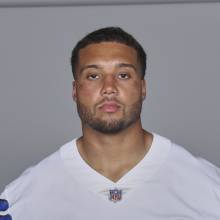 Terence Steele62Grade
Steele is a long, linear and powerful right tackle whose best value comes in the run game. He has enough explosiveness and play-strength to cover up, widen and displace defenders on base, down and double-team blocks, and his length allows him to cast a wide net when walling off targets on the move. However, his movement profile is more straight-line than reactive, which limits his ability to redirect, recover or stay balanced once his feet stall. The issue shows up most clearly in pass protection, where his frame, length and heavy hands can disrupt closely aligned rushers early, but wider alignments and higher-end athletes consistently stress his range, timing and recovery. Steele can still stymie power when he lands first meaningful contact, but he gives up too many clean losses when rushers force him to protect space or adjust late. His run-blocking and physicality still carry value, but the pass-protection ceiling is capped enough to place him closer to a role-specific starter than a stable, every-week tackle.
122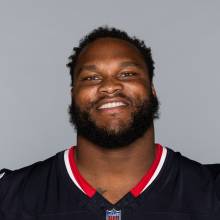 Ed Ingram62Grade
Ingram showed more consistency last season, offering some validation for his second-round pedigree while still carrying a volatile profile. His value is rooted in linear explosiveness, heavy hands and enough play-strength to create displacement when he can work vertically or strike uncovered defenders in pass protection. Ingram can generate movement in the run game when his aiming points are clean. His raw power provides a physical presence that stands out in flashes. Unfortunately, his game remains more forceful than controlled. In pass protection, he remains vulnerable in true one-on-one situations against high-end interior rushers, where his heavy-handed approach can backfire if his timing or placement is off. His feet can stall late in reps, leaving him susceptible to being slipped cleanly by refined counters. Ingram has enough size, power and physical upside to compete for a starting role, but the pass-protection variance and inconsistent control make him better suited as the fifth starter on a stable line.
121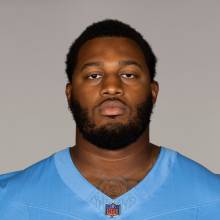 JC Latham62Grade
Latham missed four games in 2025 due to a lingering hip injury that began in training camp and was aggravated in Week 1. The campaign followed a rookie season spent playing out of position at left tackle. Context matters. At the same time, the tape remained uneven inside Tennessee's pass-heavy, lethargic offense. Latham is a massive tackle with huge hands, a firm anchor and enough raw power to engulf defenders with proper weight distribution. Range and technical consistency are still issues. He is closer to average when asked to protect on an island, and late or down-the-middle strikes shorten the corner, force him to turn early and open his inside shoulder to counters. He also gets grabby when defenders work outside his frame, reflecting the stress on his recovery range. Latham still has starter-level traits and just turned 23, but his technique and environment need to stabilize before he becomes more than a projection-based starter.
120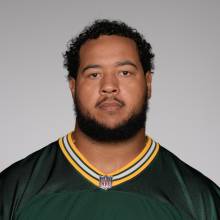 Aaron Banks62Grade
Banks remained a functional interior option in 2025. He brings size, heavy hands and a physical demeanor to Green Bay's left guard spot. He's at his best when he can use his frame to cover up defenders, wall off angles and look for work when uncovered, where he will uncork on adjacent rushers to help keep the pocket clean. In the run game, Banks has enough initial quickness and power to get to his spots on time, fit into defenders and generate functional movement, especially on zone concepts and second-level wall-offs. An upright playing style and mediocre recovery skills leave him vulnerable once reps extend. He can get out-leveraged, slipped cleanly or lose balance when defenders force him to redirect or sustain late through contact. In pass protection, Banks can survive with size and awareness, but he does not consistently anchor, mirror or recover well enough to be viewed as a stable every-week answer. His frame, toughness and uncovered value give him functional starter ability, but the body-control and sustain limitations keep him closer to the low-end tier.
119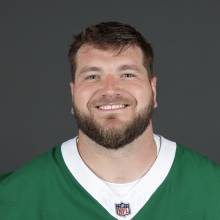 Josh Myers62Grade
Myers put together the best season of pass-protection so far during his first year with the Jets, giving New York durable and functional play over the ball. Myers is a thickly built pivot with solid physical traits. The 27-year-old veteran even showed improved awareness against basic line games and stunts to provide steadier A-gap play than seen earlier in his career. He can still be fooled by simulated pressures and bite on setup moves when isolated, but his pass-protection baseline proved to be more stable. In the run game, Myers has enough burst and size to intersect, shield and wall off targets within the flow of the play. His robotic style and below-average body control still create shaky sustain late in reps, keeping him closer to a functional starter than a true difference-maker.
118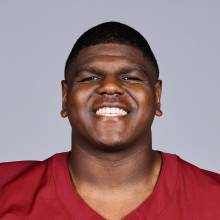 Josh Conerly Jr.62Grade
Conerly started all 17 games without missing a snap as a rookie who didn't turn 22 until November, while also transitioning from left to right tackle. His movement skills are his best trait, with the balance and range to reach landmarks on time in both phases. As a run-blocker, he can fit under control, compress defenders on angle-drive and down blocks and use his closing speed to eat ground and intersect backers on uncovered climbs. His posture and sustain still waver against push-pulls and late movement across his face. In pass protection, Conerly closes off the corner against high-side rushes. However, mediocre play-strength shows up against speed-to-power, and he oversets against tighter alignments to create soft inside access. His body control and recovery skill give him a path to become more than a functional starter if his hand-timing and anchor improve.
117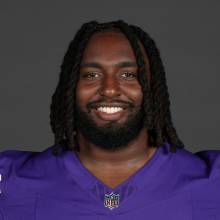 Donovan Jackson62Grade
Jackson started 14 games as a rookie while battling through a wrist injury that eventually required surgery. Jackson wins with a wide-bodied, dense build, good play-strength and firm hands, giving him a sturdy presence in the run and pass game when defenders work down the middle of his frame. His anchor is stout when he can center up rushers, but his robotic play-style and lateral stiffness create issues when his feet get stuck or he is forced to redirect against rushers who can string together moves. He was also a tick late sorting out loopers. In the run game, Jackson can surge off the ball, cover up and wall off down linemen. However, he is stiffer at the second level against movement across his face. Minnesota's run-heavy shift over the second half of the 2025 season helped limit his protection exposure and accentuate his strengths, inviting variance in a more balanced offensive structure.
116 Will Campbell62Grade
Campbell settled in as a functional pass-protector and quality run-blocker as a rookie, with his best work coming before a Week 12 MCL sprain compromised his play-strength and movement skills. When healthy, his game is built on toughness, contact balance and enough athletic ability to execute in a run-oriented structure. He plays with a hard-nosed temperament and is at his best covering up defenders, fitting into blocks and creating movement through sustained strain rather than overwhelming displacement. His pass-protection ceiling remains the concern, though. Campbell's narrow frame gives rushers relatively clean access to his edges, making it harder for him to consistently protect half-man relationships or widen the arc without help. His profile can be managed with scheme guardrails, but it leaves him more functional than high-end when it comes to protection. His run-game reliability provides a starter-level floor, but the body-type and edge softness likely cap him closer to a middle-tier tackle unless his hand usage and set variation improve.
115 Jordan Meredith63Grade
Meredith started 11 games in 2025, primarily at center, with two starts at left guard in Weeks 10 and 11 before a season-ending ankle injury. Meredith is a sawed-off interior blocker with a stiff, jarring punch, solid play-strength and an attacking mentality. He plays low to the ground and can function as a sturdy point-of-attack blocker when defenders are within his frame. A lack of length and short-area quickness are limiting factors, though. His lack of reach shows up when isolated against hulking rushers, as it did against Quinnen Williams and Kenny Clark in Week 11 last year, while his middling range caps his ability to line up targets on the move. Meredith could survive as the fifth-best starter on a good line, with real value as a swing interior backup.
114 Chris Paul63Grade
Paul emerged during his fourth NFL season and first as a full-time starter, taking over Washington's left guard job in Week 3 and providing a sturdier interior presence. Paul is a square, heavy-handed blocker with good length and enough play-strength to jolt defenders, create movement and anchor when he lands first meaningful contact. His physicality gives him real value in pass protection and flashes of displacement in the run game, but the profile remains uneven. Paul is high-cut with below-average redirect skills, creating a boom-or-bust element when he's isolated, forced to mirror or asked to regain position after his hands miss the target. His processing is also still developing against simulated pressures, late loopers and exotic pressure looks, where delayed recognition can leave him chasing rather than bracing. Paul's 2025 tape showed enough strength and functional starter traits to make him an intriguing ascending guard, but the movement limitations and inconsistent recovery skills keep him closer to the low-end starter tier than a fully stable interior answer.
113 Anthony Bradford63Grade
Bradford started every game this past season and became more functional inside Klint Kubiak's run-first, play-action-heavy system—which helped quiet some of the high-variance play from earlier in his career. Bradford wins with mass, density and some of the league's heaviest hands, allowing him to root down, hold ground and jar defenders when his timing is right. His power shows up when passing off penetrators, finding uncoveraged work, feeding down linemen on doubles and covering up defenders in the post. He also showed a firmer inside hand in pass protection, reducing some of the quick losses across his face. The volatility remains, though. Bradford's choppy footwork and tendency to bite on setup moves create short corners and isolated losses. His 2025 tape was more functional than clean, with Kubiak's structure doing a good job allowing his power to shine while masking some of the movement and hand-timing issues.
112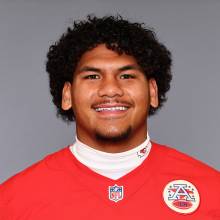 Kingsley Suamataia63Grade
Suamataia started every game in 2025 during his first full season as a guard, flashing above-average physical traits while still working through persistent technical issues. Suamataia brings very good size, square power and movement skills, giving him the ability to root down, uncork and command the point of attack in both phases when his timing is right. Consistency remains a problem. In pass protection, he still drops his outside foot and opens the door early against the threat of speed, while erratic hands that land late or down the middle lead to shaky positional leverage and inconsistent anchoring against moderately skilled rushers. In the run game, he can play high on backside cutoffs, creating quick stalemates or getting flattened out. Suamataia turned 23 in January, while still learning the guard position, leaving real upside if his technique eventually catches up to his physical tools.
111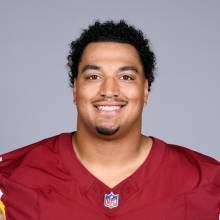 Brandon Coleman64Grade
Coleman started five games in 2025, opening the year at left guard before being benched after Week 2 due to persistent pass-protection issues. Eventually, he filled in for Laremy Tunsil with three starts at left tackle and sizable chunks of two other games. Coleman has looked much more comfortable at tackle dating back to his collegiate days. A lack of opportunity is the issue in Washington, with Tunsil entrenched and Coleman competing with Chris Paul for left guard reps. The TCU product is a wide-bodied blocker with very good mass, length and athletic ability, giving him the tools to weaponize his reach, establish first meaningful contact, stay attached once latched and create movement in the run game. He is currently miscast. Though Washington's under-center, play-action-centric structure could help him gain some level of comfort when working inside if guard remains his path toward gaining meaningful snaps.
110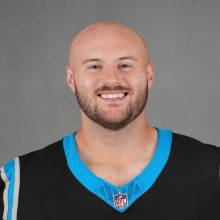 Luke Fortner64Grade
Fortner delivered a stabilizing performance after taking over for injured starter Erik McCoy as the New Orleans Saints' center in Week 8. He started the final 10 games and provided functional play. Fortner does not have a defining high-end trait, but he is an alert, assignment-sound center with enough quickness and processing to keep the offense on schedule. In the run game, he is best in zone concepts and combination work, where his initial fits, timing and ability to climb allow him to cover up targets and create functional angles. In pass protection, Fortner sorts line games, plugs gaps on time and helps keep the A-gaps contained. However, his lack of mass and play-strength limit his ability to consistently anchor or displace against higher-end interior defenders. He can survive within a rhythmic, quick-hitting system, but he is not a physically imposing presence who consistently changes the line of scrimmage. Fortner's rebound last season restored his value as a viable interior depth piece and spot starter capable of handling extended stretches at center without becoming a major liability.
109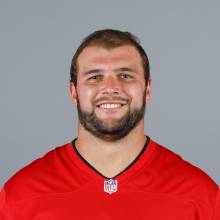 Ben Bredeson64Grade
Bredeson entered the 2025 campaign after the best season of his career but injuries interrupted his follow-up performance. He started 11 games before a Week 10 shoulder injury cost him time and a Week 14 knee issue ended his season. Bredeson is a tall, angular guard with solid athletic ability, competitive toughness and efficient hands/feet that help compensate for underwhelming mass and length. He can play with leverage when centered, win most initial hand battles and rarely lose cleanly in protection. His build and average anchor do shrink his margin for error when manipulated out of position, leaving him vulnerable to compression, picks and being knocked off levels against penetrators. In the run game, Bredeson is efficient and assignment-sound more than forceful, fitting best as a functional starter benefiting from surrounding talent and continuity.
108 Austin Schlottmann65Grade
Schlottmann has been a career backup, never starting more than four games in a season. His 2025 tape with the New York Giants was quietly encouraging, though. He started four games at center, including quality showings against the Denver Broncos and Dallas Cowboys, plus a solid 30-snap appearance against the Philadelphia Eagles. Schlottmann followed former Giants head coach Brian Daboll to Tennessee—where he now serves as the Titans' offensive coordinator—and enters 2026 with the inside track to start for the first time in his seven-year career. On film, Schlottmann played with a strong, balanced base and tight, firm hand placement, creating impressive jolt and contact balance. He stayed centered on most blocks, was effective on double-team feeds and showed the spatial awareness in protection to keep the A-gaps secure. His raw power and athletic ability are closer to the middle of the pack, but the technique and system familiarity give him a viable path to functional starter play.
107 Spencer Burford65Grade
Burford started nine games in 2025 sandwiched around a six-game absence due to a knee injury, putting enough functional tape together to enter training camp as a potential starter for the Raiders. Burford is still a little light with a below-average anchor, and his erratic processing can leave him a tick late sorting games, stunts and late movement. However, he has excellent length, solid strike-timing and enough hand pop to establish first meaningful contact, disrupt rushers' timing and stay square in his sets to minimize clean edge losses. His marginal play-strength can still lead to compression against power, but improved snap-timing helped him cover up and seal targets on backside cutoffs while adding pop in the post on combination blocks. A reunion with Klint Kubiak, after a year together with the San Francisco 49ers, gives Burford a favorable runway to compete for a starting job, while maximizing his strengths in an offensive line-friendly structure.
106 Christian Mahogany65Grade
Mahogany started 11 games before a fractured fibula sidelined him for six weeks. His game is built on force, demeanor and a power-oriented approach that shows up most clearly at the point of attack. Mahogany brings very good thump and knockback power on initial contact, feeds and uncovered work, giving him the ability to jolt defenders and create movement when his aiming points are clean. A tradeoff exists since his style can be rigid and overly aggressive, leading to overextension against slippery defenders, late movement and quick redirects across his face. In pass protection, a similar lack of control shows up when rushers make him adjust after initial contact or force him to reset his hands and base. Mahogany is still more "aim big, miss big" than refined starter, but his natural power, finishing demeanor and flashes of displacement give him enough traits to warrant continued runway if his technique eventually evolves.
105 Robert Hunt65Grade
Hunt played just two regular-season games in 2025 due to a torn biceps before returning for Carolina's Wild Card matchup against the Los Angeles Rams. When available, his profile remained consistent with the '24 season and much of his career as a rugged, power-based guard with a broad frame, thick build and heavy hands. Hunt is at his best against tightly aligned defensive tackles, where he can establish first meaningful contact, absorb force and provide pocket-clearing power. That same linear power translates to the run game, where Hunt can cover up, lift and displace down linemen on double-teams or eject second-level defenders who play him head up. His downhill, aggressive style also creates volatility. Erratic strike-timing, high pads and loose hand-placement can sap his anchor and lead to quick losses across his face. Hunt remains a useful, physical starter, but durability and pass-protection consistency limit his value.
104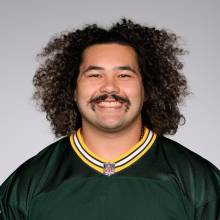 Sean Rhyan65Grade
Rhyan opened the 2025 campaign as Green Bay's starting right guard before losing the job, then moved to center after Elgton Jenkins suffered a season-ending injury in Week 10. He started seven games at center despite having almost no prior NFL experience there, giving the Packers enough confidence to extend him as their projected starter entering 2026. The 321-pound Rhyan is a bigger pivot with square power, heavy hands and good pop on contact, giving him the ability to cover up, uproot and steer defenders in the run game when his aiming points are clean. His size and play-strength also give him a functional anchor profile in pass protection. Mental spacing at the position is problematic due to a lack of experience. Rhyan's pass-protection losses often came from late processing, losing levels with his guards and failing to sort pressure quickly enough, leading to leakage and free runners against blitz looks and counter moves across his face. His hand-timing and placement are still more forceful than refined, which creates some volatility when isolated against quality interior rushers. Given the abrupt position switch, some improvement is reasonable with a full offseason at center. However, Rhyan remains more of a functional starting projection than a fully stabilized answer.
103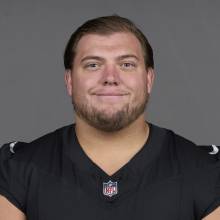 Jackson Powers-Johnson66Grade
Powers-Johnson settled at right guard to open the 2025 campaign after splitting time between center and left guard as a rookie. His second year was cut short by an ankle injury after seven starts. His tape remained a mix of promising physical flashes and raw technical execution. Powers-Johnson has a sawed-off, stout build with enough play-strength to firm up the point of attack, along with fluid movement skills to redirect and work himself out of some compromised positions. He is also a force when uncovered in pass protection, where his power and demeanor allow him to clear the pocket and punish adjacent rushers. The volatility shows up when isolated against quality interior rushers. His unpolished footwork and hand usage can create quick losses across his face, and his aggressive temperament still leads him into bad positions when he overshoots his landmarks or chases contact without control. In the run game, his strength, movement and finishing demeanor create flashes of a tone-setting guard, but the down-to-down precision still needs to improve. The 23-year-old's physical traits and age leave him with a clear runway to become a solid starter, especially inside a Klint Kubiak system. At this point in time, his current profile remains more projection-based than stable.
102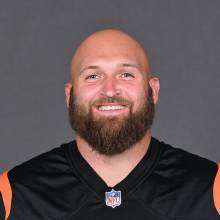 Dalton Risner66Grade
Risner provided a stabilizing presence for Cincinnati during the 2025 campaign, starting 11 games after an injury-interrupted '24 season with the Minnesota Vikings. Risner is a veteran guard whose value is rooted in awareness, toughness and pass-protection reliability. He plays with good eyes and processing speed, rarely gets fooled by line games or post-snap movement and uses efficient technique to stay connected and keep rushers from quickly accessing his frame. His anchor is functional when he is square, but he is not a naturally powerful blocker and can be stressed when rushers force him to redirect or recover late. In the run game, Risner is more positional than forceful, with enough feel to fit, wall off and stay on schedule. His stiffness and average movement skills cap his effectiveness. Conversely, his steadiness, competitive toughness and ability to keep reps orderly make him a useful short-term starter or high-end interior reserve.
101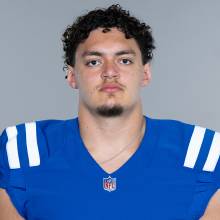 Jalen Travis66Grade
Travis finished his rookie season with four late starts between both tackle spots, playing well enough for Indianapolis to move forward with him as its full-time right tackle entering 2026. Travis is a tall, broad-framed and densely built tackle with very good length, a stiff punch and a sturdy anchor. In pass protection, he casts a wide net and is difficult to work through cleanly. But high-end edge speed can stress his range, causing him to float off his spot, let his pads rise and become vulnerable to speed-to-power counters that work inside and underneath him. In the run game, Travis can cave defenders on double-team feeds, cover up ends on kick-outs and lead around the edge to open perimeter lanes. Sudden movement across his face can still expose his high-cut frame and tardy redirect skills, but his size, power and early functionality give him a viable starter pathway if his set discipline and hand usage stabilize.
100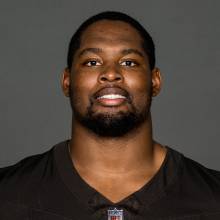 Zion Johnson66Grade
Johnson has been durable throughout his first four seasons, but his level of performance has not consistently matched the physical profile that made him a 2022 first-round pick. Johnson looks the part with a sturdy frame, good play-strength and enough athletic ability to function across concepts. However, inconsistent technique has kept him closer to the functional-starter tier than the high-end guard group. His best stretches in 2025 came late in the season, when his footwork and hand placement improved enough for him to line up targets more cleanly, create better displacement in the run game and play with firmer strikes in pass protection. Sustainability is the issue. Johnson still gets caught with uneven eye discipline, inconsistent leverage and shaky base integrity, leaving him late to recover when rushers force him to redirect or counter. His hands are not reliable enough to consistently maximize his frame, and his finish quality can fade when defenders survive initial contact. The 26-year-old's durability, physical tools and age still give him viable starting value, but he remains more projection than certainty as he enters a new environment in Cleveland.
99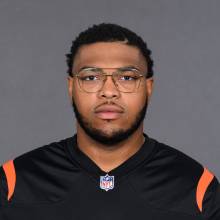 Orlando Brown Jr.66Grade
Brown rebounded in 2025 after a broken fibula limited him to 11 starts during the previous season, starting all 17 games and re-establishing himself as a durable, functional left tackle. Brown's game is built on size, length, snap-timing and veteran craft rather than range or recovery athleticism. In pass protection, he wins by staying square, protecting his inside shoulder and using his mass to create a long, difficult path through his frame. He does a good job establishing first meaningful contact, forcing rushers to work around his length and anchoring well enough to absorb power when his hands arrive on time. The limitations remain clear. Brown lacks high-end foot speed and range, which creates short corners and slower high-side losses against top rushers who can stress his edge. His run blocking is more about size, positioning and occupying space than consistent movement creation. Brown's profile is capped, but his length, mass, anchor and ability to lose slowly make him a solid low-variance starter when healthy.
98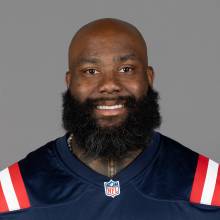 Morgan Moses66Grade
Moses completed his 12th season with 21 total starts, further cementing his status as one of the league's true ironmen. After a rough opening stretch, likely influenced by a Week 2 ankle injury, he settled near his usual baseline. Moses is a massive, wide-bodied tackle with premier length and a veteran understanding of how to weaponize it, using timing and hand-placement to establish first meaningful contact and keep rushers off his frame. Those skills help offset below-average movement skills that have become more exposed with age, especially when his pass-protection volume rises. Wide alignments can stress his range, cause him to lean at the top of the pocket and leave him vulnerable across his face late in reps. Moses still brings a sturdy anchor, functional run-game power and meaningful leadership value, but the declining recovery range keeps him in the capped-starter tier.
97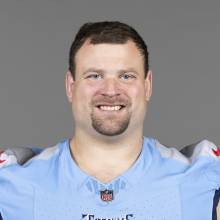 Kevin Zeitler66Grade
Zeitler reached 220 career starts (including postseason) during the 2025 campaign, starting 16 games at age 36 and continuing one of the most durable, steady guard careers of his era. Zeitler is no longer the top-10 right guard he was throughout most of the last decade, but his dense build, good play-strength, processing and veteran savvy still allow him to stay functional. He rarely puts himself in poor positions, understands where help is coming from and plays with enough leverage and hand timing to remain firm in tight quarters. Decline shows up in his lack of wiggle and recovery range when forced out of phase, especially against movement, counters or space-oriented run-game demands. Zeitler still brings toughness, reliability and enough anchor to stabilize a line. At this stage of his career, he fits best as a functional starter or high-end veteran stopgap.
96 Tytus Howard66Grade
Howard was traded to Cleveland this offseason and signed an extension to man right tackle as part of the Browns' offensive line reset. He pieced together one of his better seasons last year, primarily at right tackle while also logging starts at both guard spots. Howard is a big-bodied, long blocker with heavy hands. Improved body control and hand usage helped him better collect movement across his face and transition into his anchor. He remains a below-average lateral mover with lower-half stiffness that caps his redirect and recovery skills. In the run game, his size and power allow him to cover up and move defenders on angle-drive blocks and double-teams. When his urgency level is high—as it was in 2025 and similarly in his '22 contract year—Howard can beat defenders to the spot, strike first and play closer to solid than below-average, while his guard/tackle flexibility provides Cleveland insurance along a rebuilt front.
95 Jake Brendel67Grade
Brendel remains a useful overachiever at center, winning with quickness, efficiency and timing rather than size or raw power. He is undersized, but his movement patterns are clean enough to consistently reach landmarks, fit with proper leverage and shield defenders in a way that works inside Kyle Shanahan's balanced, rhythm-based offensive structure. In the run game, Brendel is more effective than his frame suggests as the drive man on double-teams and combination blocks, where he can deliver a surprisingly firm punch into already-engaged down linemen before climbing, while being effective on reach blocks. He also has enough burst to intersect second-level targets when the angle is clean. In pass protection, he can sort games, stay in phase and use timing, leverage and quick hands to survive most controlled reps, but the limitations show up when he is isolated late. Brendel can struggle to hold ground against power, bounce off contact and allow separation or leakage when defenders work through his frame. His quickness, awareness and system fit keep him functional, but the lack of mass and anchor strength leave him closer to a capped starter than a difference-making center.
94 Jalen Sundell67Grade
Sundell won Seattle's starting center job in training camp and started 13 regular-season games before returning from a midseason knee injury to snap for all three playoff games. His chemistry with former college teammate Grey Zabel was evident throughout the year, particularly on combination blocks where their timing and fits helped fuel Seattle's run game. Sundell's value is rooted in quickness, range and zone-blocking utility. He is effective on reaches, overtakes and second-level climbs, using his burst and angles to intersect targets and keep the offense on schedule. In pass protection, he was functional inside Seattle's run-heavy, play-action-based structure, playing with clear eyes, sorting A-gap threats and providing timely help when uncovered. A lack of mass and anchor strength are limiting factors when isolated. Interior rushers could push-pull him out of position or gradually walk him back. Sundell was a solid system starter in 2025, but his lack of sturdiness and scheme versatility create a defined ceiling unless his play-strength and hand usage improve.
93 Matt Goncalves67Grade
Goncalves kicked inside to guard in 2025 and started 16 games after logging eight starts as a rookie offensive tackle. The move helped unlock his best trait: run-blocking. Goncalves generated consistent vertical push on doubles and angle-drive blocks while arriving square and under control on climbs, making him a plus contributor inside one of the league's best run games. In pass protection, his inexperience became evident. Simulated pressures created some mental errors. The 2024 third-round draft pick can be baited out of position by counters, delaying his transition into the anchor. Goncalves has a stiff, firm punch to jar rushers when his timing is right. Ultimately, he was most comfortable off play-action when he could close space and establish first meaningful contact. His run-game value is real, but the pass-protection processing and hand-timing keep him in the functional-starter range.
92 Tyler Guyton67Grade
Guyton started 11 games as a rookie and 10 last season, with injuries keeping him out of practice and slowing much-needed developmental reps. Guyton entered the league as a one-year starter with high-end physical tools and a raw skill set, which remains largely where he sits entering Year 3. He has a prototypical frame, build and athletic ability. As a result, he displays good natural power, flashing as a twitched-up, physical blocker who can clear the pocket when uncovered, dent down linemen on double-team feeds and engulf rushers once latched. He has also started incorporating changeup sets, including three-step short, to disrupt rushers' timing. Though his posture, balance, footwork and hand usage remain volatile, especially against counters or post-snap movement in the run game. His ceiling remains considerable, but he needs sustained health and reps to refine his technique.
91 Taliese Fuaga67Grade
Fuaga started 13 games in 2025 while battling knee, back and high-ankle injuries. Still, the core appeal of his game remained obvious with his play-strength, power and a heavy-handed presence at the point of attack. Fuaga is at his best when he can square defenders, initiate first meaningful contact and use his thick build and stiff punch to dictate terms early in the rep. That approach gives him a sturdy floor against power and allows him to create movement in the run game when his landmarks are clean. Issues stem from his pass-protection margin remaining narrow. Fuaga has mediocre range, body control and recovery skill, which leads to quick losses when rushers prevent him from landing first or force him into late adjustments. He experimented with changeups, including vertical-to-jump sets, to disrupt rush timing, and those answers helped at times, but they also left him vulnerable to decisive wins across his face. In the run game, Fuaga has real knockback power and second-level finishing ability, but his middling adjustability shows up against movement across his face. His power profile gives him starter-level value, but reaching a higher tier will require cleaner hand-timing, better set discipline and a scheme that lets him play forward more than it exposes him in space.
90 Mason McCormick67Grade
McCormick started all 17 games with just one penalty, providing Pittsburgh with steady, assignment-sound play at right guard in just his second season. He is not an overwhelming physical talent, but his active hands, quick refits and excellent strain allow him to stay attached, die slowly when initially beaten and prevent clean sheds. McCormick displays enough play-strength and movement ability to function across concepts, while his leverage, toughness and hand activity make him more difficult to discard than his raw traits suggest. The limitations show up against wider interior alignments and quick movement, where he can drift, redirect late or be a tick slow to pick up loopers. McCormick is a classic greater-than-the-sum-of-his-parts starter whose technique, effort and consistency make him a net positive despite a capped ceiling.
89 Jawaan Taylor67Grade
Taylor finished his seventh season overall and third with Kansas City in 2025, starting 12 games before a triceps injury sidelined him for the final five. After reducing his penalty totals each year with the Chiefs, Taylor signed with the Falcons on a modest one-year deal that could provide real value if the cleaner discipline holds. His false-start issues are tied to the rigidity of his game, with Taylor often trying to steal the early runway needed for his size, length and play-strength to take over. Taylor remains a functional starting right tackle with prototypical size, length and enough play-strength to neutralize most rushers when he stays square. His pass sets are built on short, choppy steps that help him stay inside-out to his landmarks, followed by a two-hand strike designed to initiate contact and engulf rushers before they can access his edges. The limitations show up against slippery, high-end athletes who can evade his initial punch, force him to redirect and create quick edge losses. In the run game, Taylor can fit, cover up and wall off targets, but high pads and occasional understeps limit his sustain, finish and ability to adjust late in reps. He has learned to maximize his size and length in pass protection, but the movement ceiling and run-game limitations keep him in the functional starter tier.
88 Mike McGlinchey67Grade
McGlinchey started all 17 games last season and delivered another solid season, largely matching the level he has played at since arriving from San Francisco in 2023. McGlinchey is a tall, experienced right tackle with solid burst, good run-game feel and a clear understanding of timing, angles and concept intent. He is effective as a lead blocker around the edge, efficient on combinations and capable of cutting off the backside when his landmarks are clean. In pass protection, he can settle at his spot, stay inside-out and protect his inside shoulder, while using a circle-punch and two-hand strike to create early leverage inside rushers' frames. The tradeoff is a rigid, somewhat robotic style that works best when his snap-timing is clean and he can beat rushers to the spot. When that timing is disrupted, the margin narrows quickly. Rushers can freeze his feet, shorten the corner or compress him with speed-to-power. McGlinchey remains a functional starting right tackle because of his run-game intelligence, experience and ability to end reps quickly against most competition. However, his pass-protection ceiling is capped by limited pliability, recovery range and anchor consistency.
87 Austin Corbett68Grade
Corbett has battled injuries over the last few seasons, but he still managed 11 starts in 2025 before signing with the Bills as a free agent. Corbett is a crafty, sturdy blocker who plays on time in the zone run game, understands the intent of concepts and does a good job sorting movement, fitting square and steering defenders away from the ball. His somewhat narrow frame and mediocre arm length shrink his margin for error with positioning and hand usage, leaving him with below-average recovery skills when defenders cross his face or knock him off schedule. Even so, he generally plays within himself, limits risk-taking and has enough anchor to avoid getting walked back consistently. Corbett profiles as a steady, unspectacular starter with valuable interior versatility.
86 Jermaine Eluemunor68Grade
Eluemunor trended toward greater stability over the last two seasons with the Giants, including 16 starts in 2025, and profiles as a functional short-term answer at right tackle. His value stems from size, width and composure in pass protection. Eluemunor plays with a square posture, gains adequate depth on vertical sets and does a solid job forcing rushers to work through his frame rather than giving up immediate access to his edges. The Giants also helped manage his exposure against top rushers with chips and tight-end help on many true dropbacks, reducing the number of clean island reps he needed to survive. That structure helps mask below-average late-rep recovery, but a limited ceiling is clear when facing higher-end rushers who can stress his twitch, force him into recovery mode or string moves together. In the run game, Eluemunor can generate movement on contact and cover up defenders with his frame, but he does not consistently sustain, steer or finish deep into reps. He is not a high-upside tackle, though his size, experience and ability to keep most reps orderly make him a steady, low-variance starter.
85 Cade Mays68Grade
Mays started 12 games in 2025 and established himself as a brute-force center. His game is built on size, length and raw strength, giving him the ability to create displacement and secure interior lanes when he can work vertically in gap-oriented, downhill concepts. Mays is at his best playing square, fitting with force and using his anchor to absorb power in pass protection. He showed progress last season with the Carolina Panthers by keeping his head out of blocks and reducing some of the volatility that can come with his aggressive, brawling style. Limitations still show up when he is forced to operate laterally, redirect in space or survive isolated true one-on-one pass-protection reps against quicker interior rushers. His hand usage remains more forceful than refined, and his movement skills cap how consistently he can recover when defenders make him adjust after initial contact. Mays is not an all-situations center, but his size, anchor and vertical run-game power give him a path to functional starter value in a scheme that lets him play forward and limits space exposure.
84 Colton McKivitz68Grade
McKivitz built upon his late 2024 improvement with the most consistent season of his career last year, settling in as a functional right tackle for the 49ers. His game is rooted in efficiency, positioning and hand usage more than standout physical traits. McKivitz is broadly built with solid play-strength and enough short-area quickness to reach run-game landmarks on time, create quick leverage and stay on schedule as a positional blocker. That same efficiency translates to pass protection against tighter alignments or when San Francisco uses help to funnel wider rushers back into his grasp. His range to expand set points against wide alignments is only adequate, leaving him stressed by high-side rushes when he cannot win early with his hands. Late inside counters can also challenge his posture and balance near the top of the pocket. McKivitz is not a high-ceiling tackle, but his technical growth, independent hands and fit within the Niners' structure have made him a useful homegrown starter.
83 Will Fries68Grade
Fries returned from a devastating 2024 leg injury to start all 17 games during his first season in Minnesota, reclaiming much of the baseline performance that made him one of the league's more underrated guards. Fries is a tall, physical guard who wins with competitive toughness, good play-strength and a finisher's mentality, especially when he can fit square, strain through contact and impose himself on angle-drive blocks. His hands, leverage and anchor are still good enough to survive in protection, but the 2025 tape was not quite as clean as his pre-injury peak. He was less reliable at intersecting, sustaining and finishing second-level targets, and his hand usage in pass protection was less refined, exposing his frame and leading to more compression than his best Indianapolis Colts tape. Fries still brings starting-caliber toughness and tone-setting value, but his post-injury profile settled closer to a functional starter than the ascending guard he appeared to be in 2023.
82 Cam Jurgens68Grade
Jurgens gutted out 14 starts last season while dealing with lingering back issues, plus knee and concussion setbacks during the year. A diminished version of the player, who had looked like an ascending top-five center, was the result. Even so, Jurgens remained a solid overall starter. The injuries around him and Philadelphia's inefficient offensive structure limited how often his best trait—twitchy, explosive movement—was weaponized in space. He still showed the quickness to reach, climb and work laterally, but his play-strength and anchor were below his top form, especially when absorbing power down the middle of his frame or overtaking on double-teams. When caught in compromised positions, his recovery skill also looked less dynamic than it had at his peak. Jurgens' processing and athletic profile still give him a clear path back toward high-end center play if his back fully heals and Philadelphia's new Shanahan-adjacent structure places him on the move more often. For now, his 2025 grade reflects a functional starter with legitimate rebound potential but enough health uncertainty to keep him below his prior trajectory.
81 Tate Ratledge68Grade
Ratledge started all 17 games as a rookie and showed steady growth as the season progressed, particularly with his processing against movement, line games and simulated pressures. As his recognition improved, he was quicker to shore up penetration, pass off threats and get into his anchor, thus allowing his play-strength to show up more consistently. Ratledge has enough power to create movement on doubles, strain in the post and climb with good timing to wall off linebackers once latched. His tall, sawed-off build and tardy strike-timing still create issues, exposing his chest and leading to some glaring lapses in leverage and control when defenders beat him to first meaningful contact. Detroit's play-action-heavy structure and Jared Goff's quick release also helped minimize the number of high-leverage, true dropback reps the rookie had to survive. Ratledge's first season showed starter-level traits and encouraging growth, but his hand-timing and leverage consistency still need to sharpen before he becomes a dependable every-week guard.
80 Jake Matthews68Grade
Matthews extended his remarkable consecutive-start streak to 196 games in 2025, remaining the NFL's premier ironman regardless of position. His value remains rooted in reliability, technical competence and a run-game profile that fits best in zone-heavy structures. Matthews is a sound zone-blocker with efficient footwork, clean positioning and enough strain to stay attached, steer and finish when he reaches his landmarks on time. In pass protection, he remains functional, but the anchor has become the clear limiting factor. Power-rushers can compress him into the pocket. The issue has been more exposed over the last two seasons as Atlanta moved away from the top-five play-action rates that previously helped reduce true dropback stress. Matthews can still survive with timing, angles and experience, but he is more dependent on structure than the higher-end left tackles. His durability and week-to-week steadiness carry value beyond what the trait scores fully capture, but the current profile is a reliable, system-sensitive starter rather than a high-end blindside protector.
79 Mike Onwenu68Grade
Onwenu remains a hulking, power-oriented guard whose best value comes when he is allowed to play inside and lean into his mass. At 6'3" and 350 pounds, he can cover up and displace defenders in downhill run concepts, while bringing a firm anchor to halt the bull-rush in pass protection. His size and play-strength are legitimate carrying traits, and his proven guard/tackle versatility gives New England useful lineup flexibility. The limitations are tied to movement and range. Onwenu's mediocre recovery skills show up when isolated against wide rush alignments, late movement and quickness across his face. He is not a guard who consistently wins by redirecting or adjusting in space. His hands are functional but not especially refined, which narrows his margin of error when defenders force him off his initial track. Onwenu is best viewed as a functional starting guard with real power and anchor value, but his movement limitations keep him closer to the capped-starter tier than the high-end group.
78 Isaiah Adams69Grade
Adams worked through thumb and back injuries to start 11 games last season inside the league's most pass-heavy offense by attempts, giving him difficult exposure for a young guard. Despite the environment, Adams became one of the more pleasant surprises when watching his film. He is a burly, wide-bodied guard with very good play-strength, heavy hands and above-average contact balance, allowing him to hold up as a surprisingly effective one-on-one blocker in protection. When centered, he can absorb force, stay attached and create enough movement in the run game to look like more than just a placeholder. Arizona's additions of Isaac Seumalo and second-round pick Chase Bisontis suggest the team still has questions about Adams' long-term reliability. But his most recent tape showed starter-quality traits. If Adams stays healthy and maintains that level of play, he has a realistic path to solid-starter value.
77 Anton Harrison69Grade
Harrison started 15 games last season and remained a mixed profile, with high-end flashes, glaring losses and enough steady stretches to land as a middle-of-the-pack starter with remaining growth potential. Harrison has good size, raw strength and athletic ability to match up physically with most edge-rushers, and his pass-protection tape shows flashes of real answers, including Hamilton technique to unlock long-arms and jarring strike-power when his hands land cleanly. A lack of consistency remains problematic. High hands, tardy anchor-timing and stepping under himself against high-side rushes can shorten the corner and lead to quick compression. In the run game, Harrison shows power on kick-outs and feeds with useful range leading around the edge, but backside zone work can get leaky when he crosses over on cutoffs and overtakes. He just turned 24 earlier this year, and the tools suggest a higher ceiling if his technique stabilizes.
76 Bernhard Raimann69Grade
Raimann started 16 games in 2025 and remained a solid all-around left tackle, though his pass protection was not as clean as his '24 form. Raimann's game is built on movement skills, body control and strain. In the run game, he is a sticky blocker who can reach landmarks, wash down targets on backside cutoffs and overtakes, and intersect linebackers on climbs before steering defenders away from the ball once latched. In pass protection, his lighter, sawed-off frame still creates softer edges, and his snap timing and positional leverage were less consistent last season, leading to more short corners and oversets than he allowed at his best. He still has useful answers with his circle-punch and double-under technique, allowing him to create leverage, play longer than his frame suggests and keep rushers at his fingertips when his timing is right. Raimann's athleticism, toughness and sustain skills keep him in the dependable starter range, but the pass-protection variance and modest anchor cap him below the high-end left tackle tier.
75 Joe Tippmann69Grade
Tippmann kicked back out to guard after Alijah Vera-Tucker's season-ending injury and started all 17 games, improving over the second half of the season while the Jets shifted toward a run-heavier identity. Tippmann is a loose, fluid mover with solid play-strength. Cleaner footwork helped reduce under/oversets and kept him centered in pass protection. He still needs to pass off penetrators faster and diversify his hand usage when isolated, especially against rushers who stem inside to draw his hands down the middle before working back outside to access his edge. In the run game, Tippmann was effective in the post on Deuce and B-blocks with Armand Membou, while adding value as a puller and climber. His average size and power cap his effectiveness on base and angle-drive blocks, but the late-season growth and above-average movement profile point toward further untapped upside.
74 Zach Bako-Bewele69Grade
Bako-Bewele started 12 games in 2025 before a partially torn patellar tendon ended his season in Week 15 and required offseason surgery, interrupting what had been a steady two-year run as Green Bay's starting right tackle. Bako-Bewele remains a loose, fluid mover whose value is rooted in quickness, timing and fit inside the Packers' offensive line-friendly structure. He reaches landmarks on schedule, plays with good leverage and has the range to cover space in the run game on combinations, climbs and cutoffs. In pass protection, Bako-Bewele can get to his spots quickly and protect the corner against speed when the rhythm of the rep stays clean, but his profile is still capped by middling play-strength. Green Bay's condensed formations, tight-end alignments, chips and play-action-oriented structure also helped manage his exposure, reducing the number of true island reps where his anchor and play-strength limitations were most likely to show up. Power-rushers can compress his anchor. Furthermore, his smaller frame gives defenders more access to work through him or capture edges when his hands and base are not perfectly synced. Bako-Bewele is a useful, athletic right tackle in the right structure, but the injury and persistent strength concerns keep him closer to the functional starter tier than the high-end group he once chased.
73 O'Cyrus Torrence70Grade
Torrence is a durable and massive right guard with huge hands, good play-strength and a firm anchor. His width and stiff punch make him difficult for power-rushers to work through, and his snatch-trap technique gives him a reliable answer to steal leverage in pass protection. As a run-blocker, Torrence is a sturdy presence that bumps down linemen on double-team feeds, collects movement across his face and uses a nifty jump-hook technique to reach frontside shades. Buffalo's progressively run-heavier structure has helped maximize his strengths while masking middling movement skills and below-average recovery when pulled out of position. Torrence is not a dynamic mover, but his size, anchor, strength and improving craft have settled him into solid starter territory.
72 Coleman Shelton70Grade
Shelton returned to the Rams in 2025 after one season with the Chicago Bears and immediately stabilized the pivot, starting 20 games including the playoffs. His year proved to be a useful reminder of how much the environment can shape perception, because he worked through a difficult '24 situation with a rookie quarterback, fired staff and unstable guard play. Shelton returned to an elite offensive structure with better surrounding pieces and a quarterback who consistently keeps the offense on schedule, and the blocker's play reflected that setup. Shelton is extremely undersized in terms of wingspan, arm length and hand size, but he extracts nearly everything from his frame with clean footwork, precise hand-placement, processing speed and elite strain. In the run game, he is a sticky, well-rounded blocker who wins with leverage, effort and body positioning more than mass or raw displacement. In pass protection, Shelton is a clear-eyed presence with the awareness to sort line games, pass off stunts and use active hands to play longer than his measurements suggest. His lack of size still shows up against high-end power and length, but his technique, toughness and fit inside the Rams' system make him a rock-solid starting center.
71 Dylan Fairchild70Grade
Fairchild started 15 games as a rookie and steadily settled in, while flashing high-end power, athletic ability and recovery skill as the season progressed. His tape was expectedly unrefined, with uneven footwork in pass protection that left him flat-footed or out of position against counters from multiple alignments. But a rare trait emerged with how efficiently he could absorb and deliver force, then regain leverage from compromised positions. In the run game, Fairchild's play-strength and movement skills gave him clear impact flashes, even while his hands and aiming points still needed refinement. His down-to-down polish must catch up, but the upward trajectory and physical tools give him one of the higher ceilings among the league's young guards.
70 Ted Karras70Grade
Karras has missed just one game since joining the Bengals in 2022 and remained quietly rock solid this past season while working inside the league's pass-heaviest, least play-action-oriented offense. The Bengals' quick-release QB environment helped, but Karras held up because of clear eyes, quick processing and light feet to shore up the A-gaps at a high level. He can still be pried open by bigger interior rushers when isolated, but he resets well enough to die slowly with his anchor. In the run game, Karras is an efficient combination blocker with the quickness to reach landmarks and work through contact, though he loses steam when forced to sustain solo blocks. He is not physically imposing, but his pass-protection efficiency, durability and veteran processing make him a solid starting center.
69 Ronnie Stanley70Grade
Stanley has stabilized his career after the severe ankle injury that once threatened to push him out of the league's dependable starter tier. After rebuilding his mobility, strength and availability over multiple seasons, he started 16 games in 2025 and again looked like a functional, above-average left tackle rather than the compromised version he battled through earlier in his comeback. Stanley's value remains anchored in pass protection, where his elite length, calm footwork and positional awareness allow him to cover rushers without overextending. He is primarily a two-hand striker, which gives him a clean way to establish early control but also introduces variance when rushers beat his timing or capture the edge before he resets. His play-strength and anchor are no longer at his pre-injury peak, and his run-game impact is more positional than forceful. Still, Stanley's length, experience and set mechanics give Baltimore a steady blindside presence who can function in true pass sets, even if the margin for error is thinner than it was during his All-Pro peak.
68 Kolton Miller70Grade
Miller started only four games in 2025 before a Week 4 high-ankle sprain and hairline fracture in his right ankle ended his season. The limited sample size makes this more of a health-discounted evaluation than a clean full-year reset, especially given Miller's prior track record as a quality left tackle. When right, Miller wins with size, length, functional athletic ability and a more refined pass-protection approach than his 6'8" frame suggests. His best reps come when he can use his hands to disrupt pass-rush timing, protect his frame and force defenders to work through his length rather than win quickly around the edges. The 2025 injury context clouds how much of his movement and anchor can be cleanly projected, but his history points to a solid starter when healthy. In the run game, Miller can still cover up, create angles and generate functional movement, though he is not a consistently dominant displacement blocker. His current grade reflects a proven tackle whose recent availability and lower-body recovery create uncertainty. However, his baseline traits and body of work still support a solid starting profile if his ankle fully rebounds.
67 Kelvin Banks Jr.70Grade
Banks started all 17 games as a rookie and pieced together a promising first season, especially considering the shaky left guard play and a passing environment with high true-dropback exposure due to New Orleans' low play-action rate. A quick-pass element helped offset some of that stress, but Banks still showed a starter-level foundation. He wins with a wide frame, big hands and good athletic ability, giving him enough range and surface area to match up against a diverse collection of rushers. His high outside-low inside hand carriage and willingness to double-under against power helped him create early contact, and his inside hand became more reliable against inside moves as the year progressed. Anchor consistency and counter discipline proved to be limiting factors. Banks can be compressed by speed-to-power, and he will take the bait against inside-out counters, stopping his feet, dropping his outside foot and striking down the middle of rushers. In the run game, he showed useful movement ability to intersect targets in space, though his play-strength is still more functional than forceful. Banks is not a finished product. However, his durability, physical tools and in-season growth point toward a solid young starter with room to climb.
66 Isaac Seumalo71Grade
Seumalo remained his usual steady self in 2025, providing veteran reliability through play speed, balance and a refined understanding of space. He is not an overwhelming guard in terms of size, length, raw power or explosiveness, but he consistently operates on time and in the proper position. Seumalo wins with quick diagnosis, efficient footwork and well-timed hands, allowing him to sort line games, pass off movement and use positional leverage to stay between rushers and the quarterback. His anchor is more survival-based than forceful against bigger power players, but he dies slowly, keeps his frame square and rarely turns manageable losses into immediate failures. In the run game, he is a sound positional blocker who can fit, steer and work combinations with timing, even if he no longer creates much displacement on his own. Entering his first season in Arizona, Seumalo should bring reliable starter-level play and legitimate stabilizing value to a young offensive line, with his intelligence and consistency carrying more weight than the raw traits profile.
65 Ben Powers71Grade
Powers missed nine games in 2025 after suffering a torn biceps in Week 5. When available he played near his established baseline as a skilled, steady starting guard. Powers wins with very good hand usage, timing and strain, creating quick leverage before staying attached and steering defenders away from the ball. His hands and discipline also keep him from losing cleanly often in pass protection. The limitations are more physical than mental or technical. Powers is not an explosive mover, and his good-not-great play-strength can lead to getting jolted back at the point of attack before re-leveraging to recover balance. He will also strike with two hands against tighter alignments, opening him up to quick losses across his face. Powers remains a reliable, craft-driven starter when healthy, though the injury and average physical tools cap the ceiling.
64 Cooper Beebe71Grade
Beebe started 11 games in 2025 while working around an ankle injury. When available, he remained a rock-solid presence along the interior. Beebe's game is driven by a stout build and very good play-strength, allowing him to absorb and generate force at a high level. He roots his feet quickly to anchor on command, has the power to uproot down linemen and processes well enough to sort movement and pass off games. He is closer to an average athlete, but efficient angles help him stay on schedule in the run game. However, his sawed-off build can create short corners when isolated in protection and separation issues against hulking nose tackles. Flanked by two of the league's more powerful guards with schematic and QB continuity in place, Beebe is in an ideal spot to maintain a high floor and maximize his full potential in Dallas.
63 Dominick Puni71Grade
Puni pieced together another quality season in 2025, playing every snap for the second straight year and rebounding after a slower start that was partly tied to a preseason knee injury. Initially, the injury appeared to sap some of his ability to brace, absorb force and generate his usual power, but his play stabilized as the season progressed. Puni has a square, sturdy build with good linear explosiveness, foot quickness and enough play-strength to match up physically with most competition. His best reps show the size, balance and power that made him such an encouraging rookie starter, with the ability to create movement in the run game and hold his ground in protection when his posture and timing were right. Inconsistency remains on the technical side. Tardy strike-timing and a wide base can cause his feet to stall, leaving him vulnerable to compression or late losses against longer, powerful rushers. Those lapses are balanced by commanding wins when his leverage and hand-timing are clean. Puni is still refining his positional leverage, weight distribution and strike consistency. However, his durability, traits and early-career play indicate a solid young starter with further growth potential.
62 Graham Barton71Grade
Barton started 17 games during his second season, including three early starts at left tackle while Tristan Wirfs worked his way back from a knee surgery. His tackle snaps were predictably uneven in pass protection, but Barton remained an impact run blocker because of his rare blend of burst, body control and play-strength for a center. He is a weapon on the move, using angles, acceleration and thump to line up second-level targets, displace linebackers and create jarring movement when he lands square. He also flashes the power to uproot bigger down linemen when his leverage is right. Tampa Bay also lost both starting guards for extended stretches, which stressed the communication and feel for the interior trio. Barton's pass-protection side remains the developmental piece. The 2024 first-round pick is sturdy once latched, but his timing, spacing and recognition against line games and stunts still need to quicken, creating A-gap leakage and delayed responses when defenses force him to sort post-snap movement. His physical tools remain among the league's better center profiles. At the same time, he needs cleaner processing and pass-off timing to convert those traits into a more stable all-around starting profile.
61 Steve Avila71Grade
Avila started 13 games in 2025 after missing two early-season games with an ankle sprain, following a 2024 season that was also interrupted by an MCL injury. When available, Avila remained a powerful, physically imposing left guard with the size and play-strength to generate movement in the run game and anchor against power in pass protection. At 6'4" and 340 pounds, he can cover up defenders, displace at the point of attack and create force through contact when his pads and hands arrive on time. His pass protection is more strength-based than refined, relying on mass, anchor and body positioning to absorb rushers rather than high-end hand usage or recovery skill. The limitations show up when quicker defenders force him to redirect, mirror late movement or win the hand fight before he can establish control. Avila's movement skills are adequate for his size, but not a consistent plus, which caps his range and second-effort recovery. His best football still gives the Rams a sturdy, physical interior presence, but the injuries and middling agility keep him in the solid-starter tier rather than the high-end guard group.
60 Cole Van Lanen72Grade
Van Lanen started 10 games in 2025 across right guard, right tackle and left tackle, largely due to injuries among Jacksonville's front five. He opened Week 13 at right guard before Walker Little exited with a concussion, then held down the left tackle job for the rest of the season. Van Lanen is a crafty, efficient blocker with a firm understanding of play's intent, spacing, timing and positional leverage. His quick processing and refined hand usage allow him to create early leverage, stay square and avoid being caught out of position. That helps mitigate a sawed-off, undersized frame that can get knocked back by high-end power and leave him stranded against counters. He is not a physically imposing blocker, but his technique, awareness and four-position flexibility give him a relatively high floor as a solid starter at four of the five positions.
59 Tanor Bortolini72Grade
Bortolini filled in for five starts as a rookie two seasons ago before becoming Indianapolis' full-time center last year, starting 16 games while battling through a Week 16 concussion to return in Week 18. Bortolini is a sawed-off, lean center with very good movement skills and high-end zone run-blocking utility inside a run-first, play-action-heavy structure that maximizes his range and minimizes his lack of size and raw power. He is a weapon on combo blocks, with the quickness, angles and body control to track and intersect linebackers, while his refined hand-placement helps him establish leverage early in both the run game and pass protection. His low pads, core strength and active hands help him die slowly against power. His narrow build and middling strength still get exposed on pick stunts, back blocks and movement across his face, but the skill set fits the scheme well enough to produce quality starter value.
58 Cesar Ruiz72Grade
Ruiz missed three games last season with ankle issues. When available, he put together the most consistent season of his career. Ruiz showed real growth in pass protection, settling at his spot, playing inside-out on rushers and using improved strike-timing and placement to frame targets and stay in phase during isolated matchups. He was also cleaner sorting stunts, limiting the glaring breakdowns that showed up earlier in his career. In the run game, Ruiz used efficient aiming points, landmarks and footwork to latch, steer and stay attached rather than chasing displacement. That technical step forward allowed his stout frame, heavy hands and power to become more reliable assets. He's still not an elite mover or hand technician, but the steadier down-to-down execution pushed him into solid starter territory.
57 Tyler Booker72Grade
Booker put together a solid rookie campaign, starting 14 games at right guard after exclusively playing left guard at the collegiate level and missing three games with a high-ankle sprain. Booker is a massive interior blocker with very good width, length and heavy hands. He already understands how to maximize his frame in pass protection. He plays inside-out on rushers, funnels them into his body and uses his stout anchor to engulf most competition once contact is established. His size, strength and physicality allowed him to hold up against premier competition such as Jalen Carter. However, clean losses still showed up when his hands were late, causing him to get stood up and compressed into the pocket. His average redirect ability also shows up against loopers and movement on stunts. Booker is not a high-end mover, but he mitigates that inadequacy by running his feet, closing space and preventing defenders from stretching him into recovery mode. He already brings a nasty, tone-setting presence with the size, anchor and sustain skills to become a long-term quality starter if his hand-timing and processing skills continue to sharpen.
56 Trent Brown73Grade
Brown completed his 11th NFL season at his fifth stop, while again providing a stabilizing presence once he entered the Texans' lineup in Week 10. Across seven regular-season starts and another in the Wild Card round, Brown showed he still has high-end pass-protection value. His game is built upon gargantuan size, premier length, heavy hands and a veteran understanding of how to cover rushers without wasting movement. Brown can still blot out defenders when working on an island, establish first meaningful contact with jarring power and protect his frame by forcing rushers to work around his mass rather than through clean angles. The limitations are now mostly tied to age, wear and role. His burst, range and finishing skills in the run game have diminished, leaving him more positional than forceful outside of short-area power exchanges. Availability also prevents him from being viewed as a reliable full-season answer. Brown is now more late-season stabilizer than foundational starter, but his ability to survive on an island in true dropback concepts without regular chip help still carries real value.
55 Jon Runyan Jr.73Grade
Runyan pieced together arguably the best season of his career in 2025, starting 16 games and playing like a solid, craft-driven veteran. Runyan wins with good play-speed, excellent hands and leverage skills that help offset mediocre mass and sand. His anchor can still crack against sudden spikes, picks and stutter-bulls that catch him flat-footed, but his hand usage, light feet and recovery ability allow him to stay in phase and die slowly when initially stressed. In the run game, Runyan works underneath and inside of targets to create quick leverage, steer on the first level and take precise angles on climbs to intersect linebackers. The six-year veteran is not an imposing finisher, but his timing, technique and recovery skills make him a dependable net positive.
54 Hjalte Froholdt73Grade
Froholdt remained a solid starting center in 2025, extending his streak to three straight seasons without a missed start while also operating inside the league's most pass-heavy offense. That environment muted some of his best traits, because Froholdt's value is still most evident as a physical, tone-setting run blocker with enough movement ability to pull, climb and create force on the move. Arizona's low rushing volume limited the frequency of those impact opportunities, though the gap and pull concepts they did feature still allowed his power and underrated range to show. The tradeoff was more exposure in true pass protection. Froholdt has a stout anchor and can absorb power when square, but his sawed-off frame, shorter strike radius and average recovery skills leave him vulnerable against high-end interior quickness and length. Dynamic fronts, particularly within the NFC West, were able to slip and access his edges more often than during prior seasons. Froholdt's durability, physicality and run-game value keep him among the solid-starter tier, but his pass-protection ceiling is capped when the offensive structure forces him into a heavy diet of isolated dropback reps.
53 Wyatt Teller73Grade
Teller enters 2026 as a solid starting guard whose recent dip was real but somewhat overstated by a difficult offensive environment. Cleveland's heavier pass volume, unstable quarterback play and predictable structure over the last two seasons put more true dropback stress on Teller than earlier in his career, while knee and calf issues slightly reduced his recovery quickness. Teller remains a physically imposing interior presence, with the strength and movement ability to create displacement in the run game, particularly on pulls, angle-drive blocks and double-teams. In pass protection, his play tends to be more volatile. His hand placement can be late or erratic, which creates quick access when rushers beat him to first meaningful contact. However, his length, anchor and play-strength still allow him to match up with most interior defenders when he stays square. Teller is no longer the automatic top-tier guard he was at his peak. Even so, his power profile, functional movement and prior high-end play leave room for a rebound if the Texans' staff places him in a more balanced structure.
52 Tyler Biadasz73Grade
Biadasz remained a clear starting-caliber center during the 2025 campaign, even if his second season in Washington did not quite match his career-best from a season earlier. Offensive regression and interior turnover are necessary context, but his core skill set remained intact, with excellent timing, leverage, angles and reliability. Biadasz is one of the league's better movement centers, using precise footwork and body positioning to intersect targets on climbs, wall off linebackers and create access in the run game despite ordinary size and power. In pass protection, he provides a scrappy, technically sound presence by protecting his frame, establishing quick leverage and getting into his anchor efficiently enough to hold up against most competition. His ceiling is capped by modest physical traits, and he can be stressed by high-end power when isolated. Still, his processing, balance and improved hand usage give him a high floor. Biadasz is not elite, but his polish, durability and run-game value make him a dependable plug-and-play starter.
51 Josh Simmons73Grade
Simmons started eight games as a rookie in 2025, missing Weeks 6-9 for personal reasons and Weeks 14-18 with a dislocated elbow, but his limited sample showed real left tackle promise. Simmons was tested by high-end rushers such as Nik Bonitto and Josh Hines-Allen and flashed the premium movement profile that made him a first-round prospect, though his pass-protection consistency remained a work in progress. He's still raw with only the details of footwork, hand placement and strike-timing, which puts him in too many compromised positions. Those moments also highlight his rare ability to recover, mirror and protect space on an island. Simmons has top-tier athletic ability, fluidity and range in pass protection, with the movement skills to become a weapon on climbs, screens and space blocks in the run game. He also has enough raw strength to command the point of attack when his upper and lower halves are synced. The gap between his traits and skill set remains clear, especially with his hands, but his rookie tape showed enough high-end flashes to project an ascending starter whose athletic ceiling is among the league's best.
50 Taylor Moton73Grade
Moton remained Carolina's steadiest offensive lineman in 2025, starting 15 games and continuing to win with the well-rounded, low-volatility skill set that has defined his career. Moton's value is rooted in timing, technique and reliability more than overwhelming physical traits. In pass protection, he gets out of his stance efficiently, reaches his landmarks on time and uses active, precise hands to establish early leverage and disrupt the timing of rushers. In the run game, he is more positional than forceful, but he understands angles, fits blocks on schedule and can seal or wall off defenders when his footwork stays tied to his hands. Moton does not consistently overwhelm opponents with power, movement or finishing ability, but his technique, availability and down-to-down consistency still make him a dependable starting right tackle. He is a classic greater-than-the-sum-of-his-parts veteran whose value is often easier to appreciate inside the building than from the outside.
49 Patrick Paul74Grade
Paul completed his second season and first as a full-time starter in 2025, showing promising results inside the Dolphins' tackle-friendly passing environment. Miami's quick-game structure, Tua Tagovailoa's league-fastest time to throw and a top-five play-action rate helped reduce Paul's exposure. Still, his physical tools translated. Paul's exceptional length gives him a trump-card trait in pass protection, allowing him to widen rush paths, expand his edges and cover up some of the issues created by his high-cut frame. He can step underneath himself on redirects and lose balance against late movement, but his reach and grip strength allow him to latch, clamp and survive many reps. In the run game, Paul showed enough burst and range to intersect targets on climbs and lead blocks, with the play-strength and demeanor to overrun defenders once attached. He can still dip his head or get crossed up by movement across his face, but those issues became less frequent as the season progressed. With a new coaching staff and quarterback situation, Paul's 2026 projection carries some volatility. Even so, his length, play-strength and growing confidence provide a reasonable starter floor.
48 Braden Smith74Grade
Smith rebounded in 2025 and remained a solid starting right tackle after a challenging stretch that included multiple injuries and health-related setbacks over the previous three seasons. Smith is no longer quite the same physically dominant player he was in his peak, but his experience, play-strength and pass-protection craft still give him reliable ways to win. In the run game, he remains a sturdy, efficient blocker with the power to create movement on angle-drive blocks and the control to fit, steer and sustain. In pass protection, Smith wins more with timing, hand-placement and positioning than high-end range, using his veteran feel to stay square and force rushers through his frame. His movement skills and durability are no longer clear strengths. Even so, he still profiles as a dependable starting tackle with enough baseline quality to stabilize a unit.
47 Abraham Lucas74Grade
Lucas returned to form in 2025 after back-to-back injury-plagued seasons, giving Seattle high-quality right tackle play inside Klint Kubiak's offensive line-friendly structure. Lucas regained the play-strength that stood out as a rookie, while showing a more refined pass-protection plan, setting square to his spot and using varied, well-timed hands and changeup sets to disrupt rushers' timing. Average range against wide speed alignments is his main limitation. He tends to open early and becomes vulnerable to counters attacking his inside shoulder. In the run game, Lucas is a stout, agile blocker with enough strength, balance and movement skill to execute across concepts. Last year's film showed a quality starter, with the remaining caveat being whether his health and pass-set range can hold up during consecutive seasons and within a new scheme.
46 Roger Rosengarten74Grade
Rosengarten started all 17 games during his second season and settled in as a valuable fit inside Baltimore's run-heavy, play-action-oriented offense. His game is built on alertness, quickness and craft more than overwhelming physical traits. Rosengarten is a highly skilled run-blocker with the burst to hit landmarks, the body control to re-leverage on the move and the feel to wall off targets without needing clean displacement. His backside cutoffs are among the best from a right tackle, and his ability to reach, seal and stay attached gives Baltimore consistent value on its core run concepts. In pass protection, Rosengarten is functional but more margin-dependent. His lean, sawed-off build provides a below-average anchor and a narrower strike-timing window, allowing skilled rushers to access his edges when they beat him to first meaningful contact. He offsets some of those issues with set variation, active hands and an effective snatch-technique against heavy-handed rushers who lean into him. Rosengarten is not a power-based right tackle, but his run-game feel, movement skill and technical adaptability make him an underrated starter.
45 Brian O'Neill74Grade
O'Neill started 14 games in 2025 while managing a nagging MCL sprain he suffered in Week 4, but his overall profile remained familiar. He's a loose, fluid, athletic right tackle whose movement skills and run-game value outweigh a persistent anchor limitation. O'Neill is at his best using range, set variation and quickness to disrupt rush timing before defenders can attack his frame. His three-step short set remains an effective changeup, altering the timing and spacing of the rush while forcing defenders to adjust their approach. His two-hand strike can create immediate control when it lands cleanly, but the boom-or-bust nature of that approach leaves him vulnerable when his hands miss or arrive late, creating a soft inside shoulder for counters. Minnesota's protection structure helped manage some of that exposure with chips and built-in help, though more erratic quarterback play also led to fewer clean pocket-management answers than he has had in prior seasons. In the run game, O'Neill remains a valuable zone and space blocker, with the burst, fluidity and body control to reach landmarks, stay attached, steer defenders and lead on climbs, screens and perimeter concepts. He was not at his best in 2025, but his movement skill, run-game utility and functional pass protection still keep him among the top half of starting right tackles.
44 Paris Johnson Jr.74Grade
Johnson started 12 games in 2025 before a Week 14 MCL sprain ended his season, operating in a difficult environment that included backup quarterback play for much of the year, below-average offensive line play around him and one of the league's more pass-heavy structures. Since moving from right tackle as a rookie to the left side in 2024, Johnson has settled in as a solid, ascending starter, even if the larger leap expected from his traits became harder to fully realize in that context. His game is built on movement skills, elite length and the ability to cast a wide net in pass protection, allowing him to establish first meaningful contact and stay centered against speed-oriented rushers. Johnson has the range to protect on an island and the recovery athleticism to survive when rushers force him off his initial track. His play-strength and anchor are solid enough to function, but they are not yet imposing traits. He can be compressed by quality speed-to-power, and his run-game impact is more effective on the move than in tight quarters, where angle-drive and base blocks can stall out quickly. Johnson is at his best in space and zone concepts, where he can intersect, latch and overrun smaller targets on the front and backside. He is not a fully hardened left tackle yet, but the length, movement skill and two-year progression on the blindside still point toward a useful starter with more growth potential.
43 Cody Mauch75Grade
Mauch had his 2025 season cut short by a Week 2 knee injury. Even so, the sizable jump he made from 2023 to '24 appeared to carry over before his campaign ended. Mauch is a taller, sawed-off guard who can still get stunned and compressed by power down the middle of his frame. However, added weight and improved technique have helped him refit, re-leverage and survive those moments more effectively. His best traits are agility, strain and competitiveness. Mauch is a loose, twitched-up mover with excellent range, making him a weapon as a puller, climber and space blocker, while his balance and grip-strength have noticeably improved. He will not overwhelm down linemen with raw power, but his athleticism, strain and recovery ability point toward a good-starter profile when healthy.
42 David Edwards75Grade
David Edwards continued his career rebound last season, giving the Buffalo Bills a sturdy, reliable presence before signing with the Saints. His game is built on functional power, balance and anchor strength. Edwards creates force through the ground, plays with a square base and uses a firm punch to strike, re-leverage and halt power-rushes before they collapse the pocket. In pass protection, he is not overly dynamic, but his timing, body control and play-strength allow him to stay composed against most interior rushers. The risk comes when he overcommits with heavy strikes against high-end quickness, leaving him vulnerable to being slipped before he can reset. In the run game, Edwards is more steady than explosive, with enough strength to cover up, fit and generate movement on angle-drive blocks and combinations. He does not have the twitch or recovery range of higher-ceiling guards, but his anchor, consistency and veteran reliability make him a dependable starter.
41 Grey Zabel75Grade
Zabel started all 17 regular-season games and three playoff matchups as a rookie on the Seahawks' Super Bowl-winning offensive line, immediately translating from the FCS level into a quality starter inside Klint Kubiak's run-heavy, play-action-oriented system. Zabel benefited from a friendly environment, but his own physical traits and impact blocks were obvious. He brings very good play-strength, athletic ability and a hard-nosed, attacking demeanor, with the power to displace at the point of attack and body control to deliver knockdowns at the first and second levels. In pass protection, he plays with an ultra-aggressive mindset, using flat and shoe sets with an active, stiff outside strike to bring the fight close to the line of scrimmage. The approach allows him to close space and end reps quickly. It also narrows his margin for error against skilled interior rushers who can manipulate his leverage or evade his initial clamp. When Zabel did lose reps, those losses tended to occur quickly because of the air left behind him and the limited variety in his pass-set menu. His rookie season showed high-end starter flashes but diversifying his approach and refining the aggressive tools are the next steps to elevating his game.
40 Luke Wattenberg76Grade
Wattenberg started 15 regular-season games before a shoulder injury cost him Weeks 17, 18 and the Divisional Round. He then returned for the AFC Championship Game. Since winning the job in 2024, he has developed into an above-average starter inside Denver's offensive line-friendly structure, which leans heavily on play-action, screens, roll-outs and a well-schemed run game. Wattenberg wins with solid athletic ability, good arm length, strong hands and precise strike-timing, allowing him to offset below-average mass and play bigger than his frame indicates. His hand-placement and grip-strength show up in the run game, where he can clamp, drive and stay leveraged, while his awareness in protection limits free runners and late surprises when uncovered. His mediocre sand still shows up when defenders access his frame and pry him open on base/back blocks. Even so, his length, timing and ability to establish first meaningful contact keep him in control often enough to sustain a good starter profile.
39 Damien Lewis76Grade
Lewis put together another solid season in 2025, continuing to provide Carolina with a stout, power-oriented presence at left guard. Lewis is a massive, heavy-handed blocker with the play-strength to create jolt on contact, generate movement in the run game and provide a firm anchor against power in pass protection. His best reps come when he can cover up defenders, sit down on the bull-rush or work square through contact in downhill and gap-adjacent concepts. He is not a high-end mover, and his range, redirect ability and late-rep recovery can be stressed when asked to operate in extended space or mirror quick lateral movement. Still, Lewis' size, anchor, contact power and down-by-down physicality give him clear, reliable ways to win. He is a sturdy starting guard whose value is rooted more in force, stability and protection against power than in athletic range or high-end technical versatility.
38 Olu Fashanu76Grade
Fashanu completed his second season and first as a full-time starter in 2025, settling in as an above-average left tackle with clear pass-protection value. His best work comes from urgency, length and hand-timing. Fashanu reaches his landmarks on schedule, uses a high-low hand carriage and double-under technique to establish quick leverage. He can also drop a firm anchor once he connects through the rusher's frame. Early in the season, wide alignments and speed threats could manipulate him, exposing some lower-body stiffness and causing him to drift or open his hips too soon. Those areas improved as the year progressed, with Fashanu playing with better set discipline, narrowing the runway for rushers and reducing the amount of recovery required. His run-blocking is solid but not a major separator. He is effective on backside cutoffs and overtakes, but late redirect demands across his face can expose some rigidity on base blocks and second-level fits. Fashanu's profile is not high-end yet, but the combination of pass-protection tools, anchor and second-year growth give him a stable starter foundation with room to climb.
37 Christian Darrisaw76Grade
Darrisaw started 10 games in 2025 and exited four of them early, while continuing to work through lingering effects from the torn ACL/MCL he suffered in October of 2024. On the field, he still showed much of the profile that made him one of the league's better young left tackles: a sturdy frame, heavy hands, firm anchor and the power to create movement in the run game. Darrisaw remains physically difficult for rushers to play through, and his size, explosiveness and contact strength give him a high floor when healthy. The concern is what showed up late in reps, where his redirect and recovery skills looked slightly diminished against rushers who could string moves together or force him to change direction after the initial phase. His hand-timing and corner protection still need to be cleaner, especially given the thinner movement margin post-injury. Darrisaw will only be 27 during the 2026 season and still has one of the league's better physical profiles at left tackle, but his durability and movement rebound have become the variables that separate him from the higher tier he was tracking toward before the knee injury.
36 Chris Lindstrom76Grade
Lindstrom remained one of the league's most durable and dangerous run-blocking guards in 2025, but Atlanta's schematic shift over the last two seasons made his pass-protection limitations more visible. With the Falcons using far less play-action and exposing the line to more true dropback reps, Lindstrom's lighter frame and tardier anchor were stressed more often against high-end power. He remains an elite zone run-blocker, winning with rare quickness, leverage, leg drive and strain to reach landmarks, steer defenders and finish at angles most guards cannot access. The contrast is in pass protection, where his profile carries more variance. Lindstrom relies heavily on jump-sets and first meaningful contact to erase rushers' runway before they can build force, a strategy that is more forgiving off play-action than in static dropback situations. When he lands first, he can still close space and end reps quickly. When he misses or is forced to absorb power late, the losses can be immediate. In the right structure, Lindstrom's pass protection can play a tier higher, but his current profile is driven by elite run-game value and capped by the volatility of his true pass sets.
35 Charles Cross76Grade
Cross put together the cleanest season of his four-year career in 2025, benefiting from a strong schematic fit inside Klint Kubiak's run-first, zone- and play-action-oriented system. Cross has always been more athletic than a size-and-strength tackle, and Seattle's structure aligned well with that profile by reducing true dropback exposure and giving him cleaner angles in the run game. In pass protection, Cross is a loose, fluid mover with the length and foot quickness to stay square and protect width. However, his lighter frame can still be compressed by high-end power-rushers. That vulnerability was better managed in 2025 through a lower pass-block volume, heavy play-action usage and more proactive strike-timing that helped him protect his frame, play long and shorten the runway for rushers. In the run game, Cross brings more grit and finish than his build suggests, with the movement skills to stay attached, strain and cover space in zone concepts. His career-best season was real, but it was also aided by a system that emphasized his athleticism while reducing exposure to his anchor limitations.
34 Darnell Wright76Grade
Wright completed his third season and first inside Ben Johnson's dynamic, offensive line-friendly system, a tailored fit for his power-oriented game. Chicago's use of motion, condensed formations, play-action and run-game window dressing helped create cleaner angles while limiting some of Wright's exposure in space and true dropback pass protection. That structure allowed him to dictate terms more often and weaponize his best traits: elite play-strength, heavy contact power and the ability to uproot defenders once he gets his frame aligned. Wright performs at his best in the run game, where he can displace at the point of attack, cave down edges and finish through contact. In pass protection, his anchor and clamp strength are high-end once latched, but his average movement and recovery skills still show up when rushers isolate him in space, force him to redirect or catch him overextended. Wright is not the cleanest or most fluid tackle. At the same time, his power, anchor and run-blocking impact in Chicago's scheme make him a valuable right-side presence.
33 Alijah Vera-Tucker77Grade
Vera-Tucker missed the entire 2025 season after suffering a torn triceps in practice a week before the opener, adding another major injury to a career that has already included a torn triceps, an Achilles tear and repeated position changes. This evaluation is more projection-based than most guards, but AVT's healthy tape still points to a quality starter with high-end traits. He is an efficient, technically proficient blocker with the movement skills to reach landmarks, recover from compromised positions and stay connected through late movement. In pass protection, his balance, hand timing and ability to reset leverage give him answers against quickness and power, even if the missed season creates uncertainty about how fully those traits return. In the run game, he is more skilled and athletic than overpowering, winning with angles, timing and sustain rather than raw displacement. Vera-Tucker now moves to left guard in New England, his first extended work there since his rookie campaign, making health, positional stability and reacclimation the central variables. If his movement profile returns close to the previously established baseline, he still has top-10 guard ability. However, the injury history keeps his current grade in the good-starter tier rather than the high-end range that his talent suggests.
32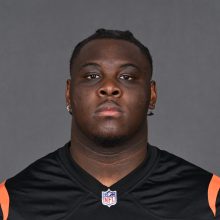 Amarius Mims77Grade
Mims took a clear step forward in 2025, moving from 13 starts as a rookie to a full 17-game slate, while showing visible growth as the campaign progressed. His profile is built on rare size, length, density and natural power, giving him the ability to command the point of attack and generate initial displacement in ways few tackles can. Mims improved most in pass protection, where better spatial awareness, set-point variation and timing allowed him to protect his inside shoulder, harden his edges and force rushers through the middle of his frame more consistently. His pass-protection leap was also aided by regular chip/protection help and a quick-game structure that kept the quarterback shallow and mitigated some high-side stress. Mims can play with high pads and inconsistent hand-placement in the run game, limiting his sustain and finish, and he can still step underneath himself when rushers sell inside before redirecting high side. Even with those issues, his mass, length and improving awareness portend an ascending starter whose best football remains ahead of him.
31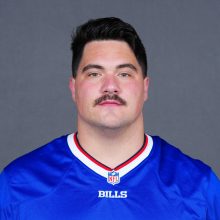 Connor McGovern78Grade
McGovern reestablished himself as a starting center in 2025, building on the transition back to his natural position after spending his first season in Buffalo as a guard. Since becoming a full-time starter in 2022, his durability and steadiness have provided significant value. McGovern wins with processing, alertness and positional leverage more than high-end physical traits. In pass protection, he plays with an aggressive mindset, and uses his length and hand-timing to establish first meaningful contact. He does a good job sorting games, blitzes and late movement from the pivot. He can play upright and lacks top-end power, but he consistently re-leverages, finds his anchor and dies slowly enough to keep the depth of the pocket intact. In the run game, McGovern is most effective using timing, angles and movement skills to intersect targets at the second level rather than creating consistent displacement. He is not an elite-trait snapper, but his processing, hand usage, durability and technical reliability give Buffalo a dependable, high-floor starter in the middle.
30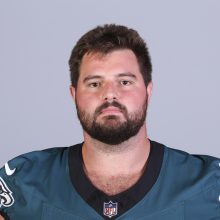 Landon Dickerson78Grade
Dickerson gutted out 16 starts last season despite undergoing August meniscus surgery, then playing through back and ankle issues that led to another offseason procedure and stem cell treatment as he worked to get healthy in 2026. The injuries clearly reduced his movement, recovery and finishing consistency. Even a diminished version of Dickerson remained a good starting left guard because of his rare size, square power and anchor strength. At his best, Dickerson is one of the league's most physically imposing guards, capable of commanding the point of attack, eating the bull-rush and creating displacement in the run game. In 2025, that power still showed up, but the lack of normal agility and redirect ability made it harder for him to stay attached, adjust late and finish with his usual force. His pass protection remained solid because rushers still had to work through his mass and anchor, but his margin narrowed when movement was required. Dickerson's grade reflects a slightly diminished, injury-compromised version of a normally high-end guard, with room to jump back up the hierarchy if his health returns closer to baseline.
29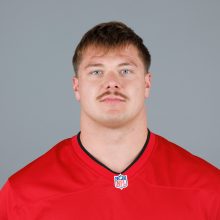 Luke Goedeke78Grade
Goedeke has battled multiple injuries over the last two seasons, including a torn plantar fascia that limited him to 11 starts in 2025. However, his on-field play has quietly settled into rock-solid starter territory. Despite one of the more sawed-off tackle builds, Goedeke has become a very good pass protector by maximizing timing, angles and hand usage. He uses a 45-degree set to reach his landmarks on schedule, then compensates for middling length with some of the league's craftier hands, including a high-low circle punch that allows him to evade, latch and clamp into rushers' frames. Once attached, his contact balance and light feet help him stay connected up the arc and redirect against counters. The limitations still show up against rushers who can attack his exposed chest with stutter-bulls or win quickly around the edge with well-timed ghost moves. In the run game, Goedeke is more solid than forceful, relying on balance, leg drive and strain to steer defenders long enough for concepts to hit. His frame creates some hard limitations, but his hand usage, balance and pass-protection craft make him a valuable starting right tackle when healthy.
28 Armand Membou78Grade
Membou started all 17 games as a rookie and immediately announced himself with a dominant Week 1 performance against T.J. Watt. An impressive physical profile translated quickly. Membou plays with natural leverage, core-strength and explosive power, giving him the ability to flip leverage late in reps and create full-body knockdowns at a rare rate for a young blocker. His burst and power also appeared on backside cutoffs, climbs and downfield finishes, where he could get defenders on their heels and steer them into displacement. Refinement and nuance remain a work in progress. In the run game, Membou can drop his eyes and get too heavy on contact, especially on frontside kickouts, leaving him susceptible to overextension. In pass protection, his outside hand can land too far down the middle of rushers, giving savvy edge defenders a path to set him up inside before attacking high side. Even with those technical cleanups remaining, Membou's rookie tape showed a starter-level floor, with rare physical flashes and enough high-end traits to project a notable upward trajectory.
27 Erik McCoy79Grade
McCoy was limited to seven starts for the second consecutive season, this time due to a torn biceps suffered in Week 7 after missing a large portion of 2024 with a groin injury. On the field, McCoy still looked like one of the league's better centers. He remains an explosive, athletic pivot with the movement skills to reach, climb, pull and create impact blocks in space, giving New Orleans a true run-game catalyst. In pass protection, McCoy plays with quickness, leverage and enough anchor to stay firm against most interior rushers, while his processing and range allow him to sort movement and stay connected through line games. He is not quite as refined with his hands as the elite centers, and his strike placement can create some variance against high-end interior rushers. Few glaring weaknesses can be found within his skill set. Availability is the issue. McCoy has played fewer than half the games over the last two seasons, turning what would otherwise be a clear high-end center profile into a more conditional evaluation entering the 2026 campaign.
26 Jonah Jackson80Grade
Jackson reunited with coach Ben Johnson in 2025 after a disjointed one-year stint with the Los Angeles Rams and quickly reclaimed his status as a quality starter. Chicago's run-first, play-action-heavy structure was an ideal fit for Jackson's skill set, but he still maximized the environment with high-level, well-rounded play. His game is built on light feet, urgency and explosive intent, giving the Bears a movable interior piece that could pull, climb and create displacement on combination blocks. He formed a physical double-team pairing with Darnell Wright, generating movement in the run game, while allowing Johnson's scheme to lean into angles, timing and misdirection. In pass protection, Jackson is sturdy and active, using independent hands to jolt, stay attached and keep rushers from accessing his frame cleanly. The limitations show up when he gets caught flat-footed with a wide base against stutters, delaying his anchor, or when he overcommits to penetrators on stunts and is late redirecting to loopers. He is also more effective on combinations and movement concepts than isolated angle-drive blocks. Jackson is not a dominant physical presence, but his pass-protection competence, run-game urgency and familiarity with the system put him back into very good standing.
25 Troy Fautanu80Grade
Fautanu moved from left to right tackle as a rookie before a post-Week 1 knee injury ended his season, then returned in 2025 to start all 17 games, while establishing himself as one of the league's better young tackles. Fautanu is an explosive, aggressive blocker with good length, high-end movement skills and one of the league's best snatch-trap techniques, allowing him to steal leverage and knock rushers off their feet when they lean into him or are lazy with their hands. His attacking style creates some volatility, because he will take risks with heavy-handed strikes and early commitments. That same temperament is central to his impact. In pass protection, his quickness, recovery ability and strike-power keep him competitive even when timing is not perfect. In the run game, he is effective on both the front and backside, with the range to reach landmarks and the play personality to finish once attached. This fall, Fautanu is expected to move back to left tackle and accommodate first-round pick Max Iheanachor. His background on the blind side makes it reasonable to project a similar level of play. Regardless of side, Fautanu's explosiveness, leverage-stealing tools and competitive urgency make him difficult for defenders to attack with clean, repeatable plans.
24 Kevin Dotson80Grade
Dotson remains one of the league's most physically imposing right guards, continuing to thrive inside a Rams system that fits his power-oriented game. Los Angeles' heavy play-action usage, downhill run menu and Matthew Stafford's quick trigger help reduce the burden of true dropback protection. Even so, Dotson's individual value remains clear. He is a stout, tone-setting guard with elite play-strength, firm anchor and the ability to halt rushers or uproot defenders once he establishes leverage. Dotson is not a high-end mover, but his footwork, angles and understanding of landmarks allow him to create sound positional leverage in pass protection and intersect targets on the move. In the run game, he is at his best covering up, displacing and caving defenders in tight quarters, giving the Rams a reliable source of interior force. His profile is not as recovery-based or expansive as the top-tier guards, but his size, power and scheme fit keep him entrenched as a very good right guard.
23 Tyler Linderbaum81Grade
Linderbaum will enter the 2026 campaign as a very good, scheme-dependent starting center whose value is driven by rare movement skills and high-end run-game impact. He is at his best in zone concepts and working on the move, where his quickness, range, leverage and angle control allow him to reach landmarks, create displacement and unlock second-level access. Linderbaum's athletic profile remains among the league's better center-specific traits. His processing, balance and natural leverage help him punch above his weight class. Pass protection can be problematic, because his smaller frame and compact build create a thinner margin when isolated against high-end interior rushers. He can be compressed by power and presents softer edges when forced to anchor without guard help. Despite those concerns, the three-time Pro Bowler has the leverage, balance, recovery athleticism and functional strength to keep him from becoming a liability. Linderbaum is not the most physically imposing center, but his movement skills and run-game range give him clear high-end starter value.
22 Jordan Mailata81Grade
Mailata remained a very good left tackle in 2025, but his play dipped slightly compared to his career-best '24 performance. Some of the downturn was tied to the Eagles' left side losing a bit of its usual force with Landon Dickerson playing through injuries. Mailata remains a rare mover at 6'8" and 360-plus pounds, with the mass, range and force to cave edges, displace the front side and cover space in Philadelphia's run-heavy structure. In pass protection, his size and improved patience allow him to engulf rushers when he stays square and gets his hands fit. Conversely, his low hand-carriage created more issues in 2025. Late hands exposed his chest, invited pocket compression and made it harder for him to control rushers before they built force through his frame. He can still be stressed by inside counters and late redirects, but his size, movement skill and play-strength give him a wide survival margin. Mailata remains a high-quality starter with rare run-game impact, though the pass-protection hand timing and slight year-over-year dip prevent him from joining the upper-tackle tier.
21 Sam Cosmi82Grade
Cosmi did not make his 2025 debut until Week 7 upon returning from the ACL tear he suffered during the previous season's Divisional Round. He then had this past season cut short by a concussion in Week 16. Across nine starts, he still looked close to the breakout-caliber player he became in 2024. Cosmi is one of the league's more talented guards, with the athletic ability, play-strength and recovery skill to match up against top interior competition. His pass protection serves as his foundation. He plays centered with even weight distribution, uses independent hands to stay attached without overcommitting and has the quickness to anchor, harden his edges and work out of compromised positions. Cosmi is also a good run-blocker, combining power and agility to create movement, fit angles and stay connected on the move. Availability is the only real drag on his profile after two significant injury interruptions during a 12-month span. At 27, he still has the traits and technical foundation of a top-tier guard, but his 2025 grade reflects a high-end player whose recent injury history prevents a cleaner placement.
20 Spencer Brown83Grade
Brown remains a high-end right tackle, though his pass-protection consistency dipped from the previously seen 2024 breakout performance while suffering through calf, shoulder and eye issues. The shoulder injury was especially relevant, showing up in a difficult Week 12 matchup against Houston's edge duo of Danielle Hunter and Will Anderson Jr., where his play-strength and ability to finish reps looked compromised. Brown's value still begins with rare movement ability for a 6'9" blocker. He reaches his set points with elite quickness, uses independent strikes to maximize his length and can establish first meaningful contact before rushers are ready to deploy counters. When he loses early, his recovery range allows him to stay attached, widen the path and die slowly rather than give up immediate access to the quarterback. As a tradeoff, his frame still creates leverage exposure, especially on angle-drive blocks and power exchanges where defenders can get underneath him. Brown remains a weapon on the move and a very good pass protector, but his 2025 effort reinforced that elite athletic tools still require clean timing, health and leverage management to stay in the top right-tackle tier.
19 Dion Dawkins83Grade
Dawkins remains one of the league's more difficult left tackles to solve, because his pass-protection profile is both physically imposing and structurally uncommon. He has rare mass, excellent length and quick enough feet to survive on an island, but the separator is how he uses those tools to control the terms of the rush. Dawkins aligns with unusually wide splits that create space, isolate rushers and allow him to dictate the timing of first meaningful contact. Once latched, his grip strength and body control make reps difficult to restart. His snatch-trap package—the "Ice Pick," as he calls it—is one of the league's best answers against long-arm rushes, allowing him to protect his frame, punish forward lean and end reps quickly. Dawkins also brings clear run-game value as a mover, where his range, play-strength and finishing temperament show up as a puller and lead blocker. His game is not conventional, but it is refined and highly functional. He wins by expanding the edge, forcing rushers into predictable angles and closing reps with power.
18 Joe Alt83Grade
Alt's second season was disrupted by circumstance before injury ultimately ended it. After moving from right to left tackle following Rashawn Slater's season-ending knee injury, Alt immediately carried over the level of play that made his 2024 rookie season so impressive. A Week 4 high-ankle sprain cost him time. After he returned in Week 8, a more significant ankle injury ended his season a week later. The limited sample still reinforced a larger point: Alt already established himself as one of the league's most balanced and technically advanced tackles, regardless of side. His game is built on size, range, patience and unusually clean mechanics. He rarely oversets, stays square through contact, plays with controlled hands and has the recovery ability to survive when rushers force him off his initial track. In the run game, he wins through angles, leverage and sustained positioning rather than raw displacement, giving him a high floor across schemes. Through two seasons, Alt has looked less like a young tackle still stabilizing and more like a roster cornerstone whose availability has been the only real early-career concern.
17 Aaron Brewer84Grade
Brewer produced a special season in 2025 inside Mike McDaniel's zone-heavy run game and quick-hitting passing structure, which leaned heavily into screens, play-action, perimeter concepts and timing throws that fully maximized his skill set. The second-team All-Pro is a sub-300-pound center with rare movement skills, giving Miami a true weapon on reach blocks, overtakes, climbs and space concepts. His second- and third-level impacts were as good as any offensive lineman's in football last year, with Jason Kelce-esque range and finishing ability. In pass protection, Brewer has made meaningful strides with his hand usage, using quicker strike-timing and improved placement to establish first meaningful contact and protect his frame despite a lack of mass. He will always have a smaller margin against high-end power, but his leverage, balance and elite recovery skills allow him to survive enough anchor stress, while staying effective against quickness and movement. Brewer's build keeps him from being a scheme-proof center, but his movement skill, run-game impact and improved pass-protection make him one of the league's most valuable interior linemen.
16 Peter Skoronski84Grade
Skoronski continued his ascent in 2025 despite an unfavorable offensive ecosystem that included heavy pass volume, limited play-action support and inconsistent pocket management from a rookie quarterback. He did not miss a snap for the second consecutive season and emerged as one of the league's most refined young pass-protecting guards. Skoronski wins with efficient pass sets, precise hands, clean weight distribution and advanced leverage control, allowing him to create, refit and sustain positioning on rushers while playing longer than his measurements suggest. His feel when uncovered is also a plus, with the awareness and physicality to clear the pocket, dent adjacent rushers and pass off games with force. In the run game, Skoronski's leverage understanding translates into strong sustain, steer and finish skills, with enough movement ability to track and intersect targets on the move. His narrower, sawed-off frame can still create softer edges, and decisive loopers can test him on stunts before he regains control. Still, his recovery skill, hand precision and ability to die slowly minimize clean losses and point to a high-end guard whose game is still climbing.
15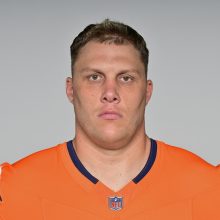 Garett Bolles84Grade
Bolles delivered the most consistent season of his career in 2025, starting every game for the third straight year and materially raising his pass-protection profile to one of the league's better blindside protectors. Bolles has always had the athletic ability, urgency and finishing temperament, but the current difference is the level of control in his hands and set mechanics. He routinely wins early with a high-low hand approach that captures the rusher's frame, protects his inside shoulder and forces speed-rushes to widen beyond the corner. His inside-hand strike remains a weapon for disrupting timing, but he is no longer as dependent on isolated flashes of aggression to survive. Bolles still benefits from Denver's offensive line-friendly structure under Sean Payton, but the improvement is real, as seen through cleaner leverage, fewer self-inflicted short corners and more consistent answers against counters. He is not an overpowering run-blocker, but his movement skills, competitive toughness and improved hand placement give him value across concepts. The result is a high-end left tackle whose game has aged into more precision without losing its edge.
14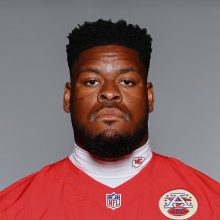 Trey Smith85Grade
Smith was limited to 12 starts in 2025 after suffering high- and low-ankle sprains late in the season, interrupting what had been one of the league's best durability profiles through four regular seasons and Kansas City's extended playoff runs. When available, Smith remained one of football's premier interior enforcers, pairing prototypical guard size with elite competitive toughness, heavy hands and immense raw power. His run-game value is rooted in displacement, strain and tone-setting physicality, with the ability to dent fronts and overwhelm defenders when his leverage is right. The most encouraging development was his pass protection, where his hand usage looked as balanced and controlled as it has been in his career. Smith found a better mix of patience and force on his creep-sets, using his heavy outside hand to initiate contact without overextending against wider alignments. That allowed him to play with cleaner posture, protect his edges and maintain better positional leverage against top interior competition such as Zach Allen, Jalen Carter and Jeffery Simmons. Smith can still tighten his strike-timing to protect his frame and find his anchor more quickly, but his 2025 film reinforced a complete, high-end guard profile whose only real caveat was availability.
13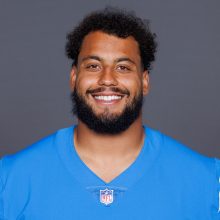 Rashawn Slater86Grade
Slater missed the entire 2025 season after suffering a torn patellar tendon last August, making his NFL1000 placement more projection-based than most tackles in this tier. Before the injury, Slater had already established himself as one of the league's premier left tackles, with a multi-year profile built on rare leverage, core strength, recovery athleticism and high-end pass-protection performance against top rushers. His compact build gives him natural access to leverage, and his anchor remains one of the cleanest in football because he can absorb force without losing posture or widening his base into recovery mode. Slater's best reps come from his ability to stay square, match speed, recover from late stress and keep rushers from accessing his chest cleanly. He is also a quality run-blocker with enough movement skill and play-strength to execute across concepts, though his value is still driven primarily by pass protection. The injury creates real return-to-form risk, especially for a player whose game relies on lower-body explosiveness and recovery range. At 27 years old and coming off multiple elite-caliber seasons prior to last year, Slater still projects as a high-end blindside protector if his movement profile returns anywhere close to baseline.
12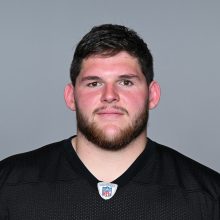 Zach Frazier86Grade
Frazier followed an outstanding rookie season with another high-end year in 2025, reinforcing his place among the league's top centers. Rare play-strength, leverage and contact balance are the pillars of his game, giving Pittsburgh a tone-setting presence at the pivot. Frazier consistently plays from positions of strength, using his natural power and feel for angles to create movement in the run game, displace on doubles and strain through contact without losing balance. In pass protection, his anchor is already one of the position's best, allowing him to sit down against power, absorb force and keep the depth of the pocket firm. The next layer of his growth has come with cleaner processing and hand usage, where he has become more efficient sorting games, passing off movement and staying square rather than turning early or opening soft edges. He is not a rare space player like some lighter centers are, but his functional movement is good enough because he wins so consistently with leverage, power and positioning. Frazier already has the physical presence, processing and down-to-down reliability of a top-tier center, with enough remaining technical polish to keep climbing.
11 Joe Thuney86Grade
Thuney remained an elite-level starter during his first season in Chicago, bringing his usual technical mastery, week-to-week consistency and championship résumé into Ben Johnson's offensive line-friendly system. Thuney is undersized by guard standards in terms of mass and length, but he continues to win with pristine footwork, strike-timing, hand usage and leverage manipulation. In pass protection, he is one of the league's most refined interior blockers, using spacing, hand-fighting skill and processing speed to diagnose line games, pass off stunts and stay connected without overextending. Bigger rushers can still test him through the middle of his frame, but Thuney's balance, positioning and ability to die slowly prevent most reps from turning into clean losses. In the run game, he wins more with timing, leverage and fit accuracy than raw displacement, arriving on schedule, creating quick control and steering defenders to open lanes. His feel for the position and technical precision continue to mitigate a lack of ideal size and power, keeping him among the NFL's most reliable high-end guards.
10 Andrew Thomas87Grade
Thomas remains a top-shelf left tackle when available. At the same time, availability has become the defining tension with his evaluation. After missing significant time in 2023 and '24, Thomas opened the '25 campaign still working his way back from the Lisfranc injury that ended his previous season, missing the first two games before returning in Week 3. He played at a familiar high-end level before another hamstring injury occurred in Week 15 and interrupted yet another season. On the field, Thomas' pass-protection profile is built on massive size, smooth footwork, patient tempo, clean weight distribution and active hands that allow him to beat rushers to landmarks without overextending. He can establish first meaningful contact, stay square through counters and anchor with enough strength to end reps once latched. Thomas is also a quality run-blocker with the power to displace at the point of attack and enough range to cover space through angles and climbs. His accumulating injury history is the only reason he is not treated as a truly elite tackle.
9 Tyler Smith88Grade
Smith produced another high-end season in 2025 despite kicking out to left tackle for the final three games. His game is built on elite, arresting play-strength, giving him the ability to latch, clench and end reps on command in a way few guards can match. Smith's anchor is one of football's best, and his ability to generate force through the ground allows him to absorb power, stop momentum and reset the terms of the rep quickly. He still has moments where he bites, drifts into oversets or lands his outside hand down the middle of rushers, creating quick edge access, but his movement skills and recovery strength usually prevent those losses from becoming routine problems. In the run game, Smith can uproot and displace down linemen at the point of attack, open lanes with raw force and deliver rare knockout blows on linebackers when climbing or releasing into space. Remaining refinement is necessary with his leverage maintenance and timing against slippery defenders, who can access his edges during the drive phase when he is late to re-leverage. Smith is not a fully pristine technician, but his power, anchor, recovery traits and impact-block ability keep him firmly in the top tier among guards.
8 Quinn Meinerz90Grade
Meinerz is coming off his second consecutive first-team All-Pro season and has the film profile to support his place at the top of the right guard hierarchy. Built with rare density, natural leverage and explosive power, Meinerz is a force-of-nature run-blocker who can displace at the point of attack, climb with range and erase targets on the move across concepts. His blend of size, play-strength and movement skill gives Denver a true tone-setting presence. Growth in pass protection has been the difference over the last two seasons. He is not yet a pristine technician, but his anchor, quickness and improving strike plan have made him a high-end interior protector rather than merely an elite run-blocker. Meinerz will still invite some variance with his aggressive up-kick approach and strike-timing, but those same tools can disrupt rushers early and showed up against top competition such as Jalen Carter and Chris Jones. At 27, Meinerz is squarely in his prime and has already established himself as one of the new standard-setters at guard.
7 Penei Sewell90Grade
Sewell enters 2026 with expectations of moving back to his collegiate home at left tackle after five seasons as one of the league's premier right tackles. The projection requires some side-switching caution, but Sewell has the rare physical profile, prior left-side background and functional technical foundation to make the transition without changing the core evaluation. His '25 film again showed one of football's most dominant run-blocking profiles, built on elite explosive power, rare movement skill at 335 pounds and the ability to create offense as a featured piece rather than a static edge blocker. Sewell can displace at the point of attack, erase targets in space and generate force from angles most tackles cannot access. His pass protection is high-level but less airtight than his run-blocking. Sewell has an elite anchor, rare mass and outstanding recovery strength, allowing him to absorb power and stabilize the pocket when his set discipline holds. The vulnerable moments come when top rushers lure him out of position, stress his timing and access his edges before he can re-center. That keeps him below the cleanest pass-protecting tackles, but the overall package remains elite. If the left-side transition follows anything close to the Tristan Wirfs' path, Sewell has the traits to remain a top-tier tackle while offering one of the league's most forceful run-game presences at the position.
6 Trent Williams92Grade
Williams remained one of the league's defining offensive linemen in 2025, playing 1,075 snaps—his most since arriving in San Francisco—while still performing at an elite overall level at an age where most tackles are long removed from starting-caliber play or even retired. The pass-protection profile showed more volatility than during his peak years, with a few more clean losses and moments where rushers could set him up and slip across his face. Even so, Williams remained a high-end protector capable of handling top competition on an island. His run-game value continues to be unmatched, too. Williams remains the league's best run-blocking tackle because of his rare blend of size, explosiveness, range and power, allowing him to erase targets on the move, command the point of attack and seal the backside with his signature snatch technique. He is no longer quite as airtight in protection as he was at his apex, but his physical tools, play-strength and run-blocking dominance still make him one of football's most valuable tackles.
5 Creed Humphrey93Grade
Humphrey remained football's best center in 2025, continuing the same elite standard that has defined his first five seasons in Kansas City. Humphrey's profile is rare because he combines center-specific processing and spatial awareness with guard-level play-strength and anchor ability. In pass protection, he consistently plays with leverage, balance and core strength, allowing him to stonewall power, mirror quickness and keep the depth of the pocket firm. His feel for spacing and line games keeps him in clean position, and he rarely gives rushers easy access to his edges or chest. Humphrey is equally valuable in the run game, where his power, pad level and body control allow him to displace on angle-drive blocks, create movement on doubles and stay attached in space on screens and climbs. There are no meaningful structural weaknesses in his game. He is durable, technically sound, physically imposing and still athletic enough to execute across concepts, making him the league's most complete and reliable center.
4 Quenton Nelson93Grade
Nelson pieced together another elite season in 2025, anchoring a Colts front that powered one of the league's best run games inside a play-action-heavy structure. Nelson remains the prototype at guard because of his rare combination of physical traits, processing speed, competitive toughness and positional mastery. In the run game, he is still a dominant force with the play-strength to displace, the movement skills to cover space and the finishing ability to erase targets at every level. His pass protection remains high-end as well. Nelson consistently wins with leverage, anticipation and elite processing, using his spacing and feel when uncovered to diagnose line games, pass off stunts and keep his body between the rusher and quarterback with minimal wasted motion. Occasional quick losses against high-end interior rushers happen, but they are exceptions within an otherwise complete profile. Despite his relentless demeanor and premier finishing skills, Nelson committed just two penalties in 2025, the lowest mark of his career. He remains a certified tier-one guard entering 2026.
3 Laremy Tunsil94Grade
Laremy Tunsil delivered arguably the best season of his career during his first with the Washington Commanders, rebounding from a penalty-heavy 2024 campaign to once again play at an All-Pro level. He was a difference-making presence and performed like the league's premier pass-protecting left tackle, with statement games against top rushers such as Micah Parsons and Nik Bonitto. Tunsil's protection profile is built on exceptional foot quickness, balance and positional leverage. He reaches his spot with square posture, restricts the rusher's pathway before contact and then latches with elite strike-timing and hand placement. His ability to stay calm, connected and efficient in true one-on-one situations makes him one of the game's cleanest island protectors. Tunsil also produced the best run-blocking season of his career, using his movement skills to intersect targets on climbs, screens and lead concepts while showing more strain, sustain and finishing temperament than in prior seasons. After re-signing with Washington and becoming the first offensive lineman to cross the $30 million-per-year threshold, Tunsil's 2025 play matched the price thanks to elite pass protection, improved run-game impact and high-end value at the sport's premium offensive line position.
2 Tristan Wirfs94Grade
Wirfs' 2025 season came with more availability turbulence than expected, beginning the campaign on PUP after July knee surgery and later missing additional time with oblique and toe injuries. However, the on-field product remained elite across 12 starts. Wirfs has fully completed the transition from perennial All-Pro right tackle to premier left tackle, and his film now carries the same rare certainty on either side. His pass-protection profile is built on patience, balance, elite core-strength and hand placement that consistently protects both edges without creating soft access to his frame. Rushers are often forced to play through him, which is a losing proposition given his anchor, body control and ability to absorb force without conceding the pocket. Wirfs is also one of the league's best run-blocking tackles, pairing rare movement skill with overwhelming play-strength to displace at the point of attack, sustain through contact and cover space without losing control. The durability interruptions slightly complicate the season snapshot, but they do not change the broader evaluation: Wirfs is an elite, complete tackle in his prime with one of the game's highest floors.
1 Lane Johnson95Grade
Johnson started only 10 games in 2025 before a Week 11 Lisfranc injury ended his season, making availability the only real caveat attached to the league's top tackle profile. His level of play remained consistent with his Hall of Fame-caliber standard. He is still football's best pass-protecting tackle, regardless of side, thanks to a rare blend of athletic ability, play-strength, balance, recovery skill and technical mastery. Johnson can win early with timing, quickness and positioning, then survive late with core strength, independent hands and redirect ability. He remains a complete run-blocker as well, with the power to displace on the front side, the range to cut off pursuit on the back side and the movement skill to lead in space. Johnson's career arc continues to reinforce that some elite players do not simply age gracefully; they age by narrowing the ways they can be beaten.